




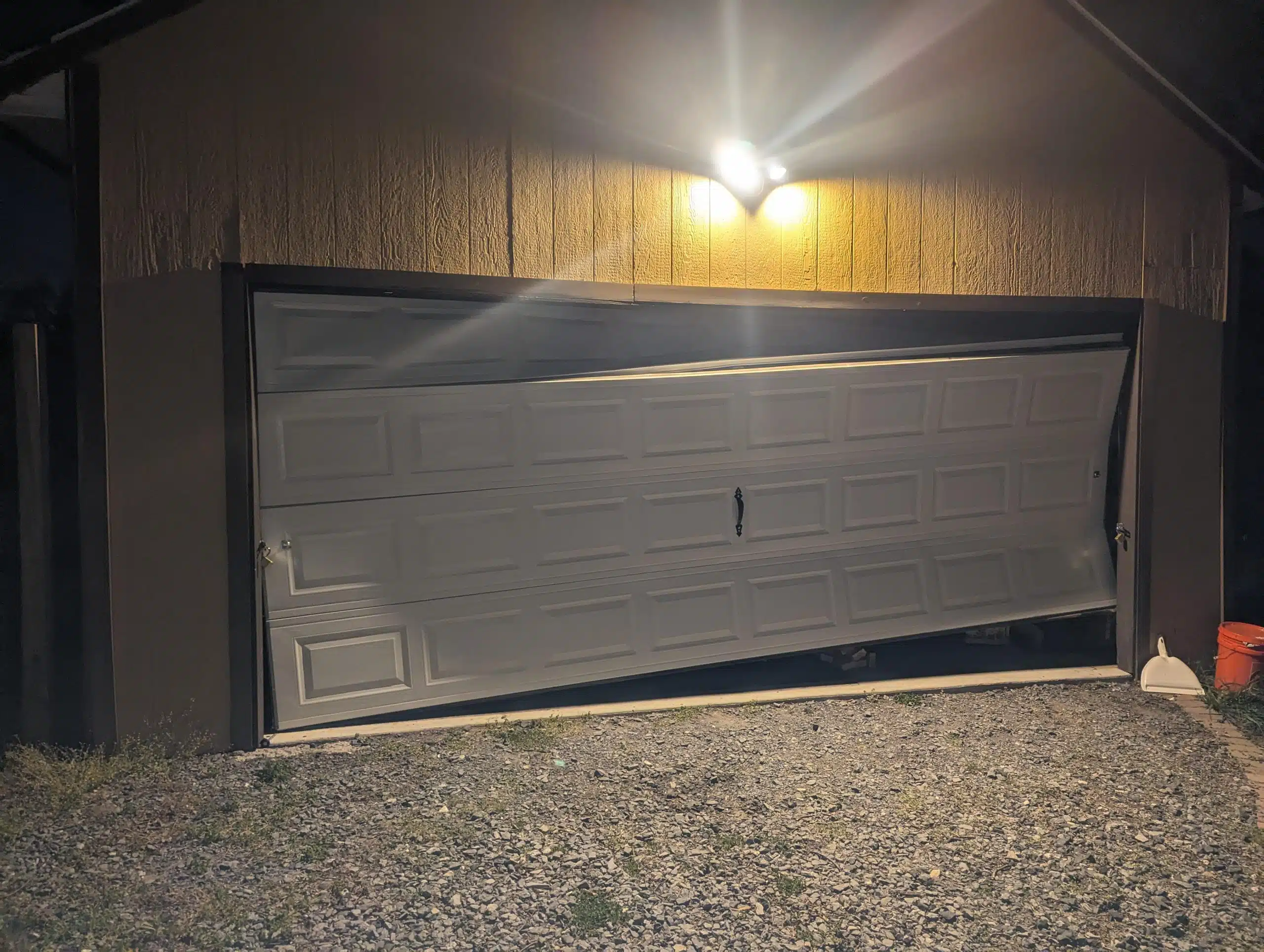
When a garage door goes off track, it can feel like it came out of nowhere. One day the door runs fine, and the next day it leans, scrapes, or stops halfway like something “snapped.” In reality, most garage door off-track problems build up over time. A door may start rolling a little tighter, the rollers may start wearing, or the track spacing may drift slightly. Then one more trigger, like a windy day, a quick bump, or a hot afternoon, pushes it past the point where the rollers can stay seated.
This guide explains the why behind a garage door off-track issue in plain language. You will learn what makes a garage door come off track, what times and conditions make it more likely in Anaheim, and what early warning signs homeowners often miss.
Quick Answer
Garage doors jump the track when the roller path becomes unstable. That usually happens because the track is no longer aligned correctly, the rollers are worn and wobble, the door lifts unevenly due to cable tension problems, or the door starts binding, and the rollers climb the track edge. In Anaheim, CA, heat can increase friction, wind can blow debris into the lower track area, and busy daily cycles can loosen hardware over time, making off-track issues more likely at certain times of the year and certain times of day.
For the main list of safe next steps and quick checks, read Garage Door Off Track: Top Causes And Safe Next Steps.
What It Means When A Garage Door “Jumps The Track”
A garage door is designed to stay centered between two tracks. Rollers sit in the track channel and guide the door up, back, and down in a controlled path. When a door jumps the track, it means at least one roller has left the channel or is riding the edge instead of sitting inside it.
This can show up as:
- A door that leans to one side
- A scraping or grinding sound
- A door that stops in the middle
- A door that closes unevenly
- A door that wobbles more than normal
The important idea is this: the track and rollers are a guidance system. If that guidance system is no longer stable, the door cannot travel safely.
Why Garage Doors Come Off Track In The First Place
Most off-track events happen when one of these five conditions is present. Sometimes more than one is happening at the same time.
The Track Spacing Or Alignment Has Drifted
Tracks are mounted with brackets and fasteners. Over time, vibration can loosen them, or a small impact can shift them.
What causes drift:
- Daily vibration from opening and closing
- Minor impacts from vehicles, bikes, or stored items
- Loose fasteners that slowly back out
- Track brackets that were not secured firmly to the framing
Why does it lead to off-track trouble:
- When track spacing changes, rollers are no longer centered
- Rollers begin to rub the track edge
- Eventually, a roller climbs and exits the channel
Rollers Are Worn And Start Wobbling
Garage door rollers should roll smoothly and stay straight. When bearings wear, the roller can tilt and wander.
What causes roller wear:
- High cycle counts over the years
- Dust and grit working into bearings
- Older rollers with tired bearings
- Doors that are slightly misaligned and force rollers to rub
Why does it lead to off-track trouble:
- A wobbling roller rides the track edge
- The door shakes more, which adds movement to the track
- A roller can pop out during a closed cycle when the force increases
The Door Lifts Unevenly From Cable Or Drum Problems
Cables lift the door evenly on both sides. When one side loses tension, the door rises crooked.
Common reasons:
- A cable starts fraying and slipping
- A cable is not seated correctly on the drum
- The door binds on one side and causes an uneven wrap
- Hardware shifts and changes the cable angle
Why does it lead to off-track trouble:
- A crooked door pushes rollers toward the edge
- One side leads while the other lags
- A roller can exit the track, especially at the curve
The Door Starts Binding, And The Opener Forces It
An opener is designed for a door that rolls smoothly. If the door starts binding, the opener may pull harder than it should.
Common binding causes:
- Track alignment drift
- Roller wear
- Bent track sections
- Door sections share a fitting at the hinges
- Debris in the track path
Why does it lead to off-track trouble:
- The opener pulls the door into a tight spot
- The door twists slightly under strain
- Rollers climb the edge and jump out
A Track Section Is Bent Or Pinched
A dented track creates a pinch point. When a roller hits the pinch point, it may bind or get pushed outward.
How it happens:
- Impact near the track
- Long-term rubbing from misalignment
- A bolt protruding into the track channel
- Track metal fatigues and warps
Why does it lead to off-track trouble:
- Rollers are forced sideways
- The roller cannot stay seated
- The door jams and then shifts out
When It Happens Most In Anaheim, CA
Homeowners often ask why this seems to happen at the worst time, like right before work or during a busy weekend. The timing patterns are real, and garage door maintenance plays a role because small wear issues tend to show up during weather swings and high-cycle periods. Here are the most common “when” scenarios for Anaheim.
After Windy Days And Santa Ana Conditions
Wind can carry grit, leaves, and debris into garages, especially near the lower corners. It can also blow lightweight items into the track line.
What homeowners notice:
- More scraping near the bottom
- A door that suddenly rolls tighter
- Debris sitting near the track edges
During Hot Afternoons In A Warm Garage
Heat can make an already tight door feel tighter. It can also increase friction on worn rollers and make a binding spot worse.
What homeowners notice:
- The door runs rougher mid-day
- The opener sounds louder
- The door hesitates at the same spot
After A Minor Impact That Seemed “Too Small To Matter”
A light bump to the track or a bracket can change track spacing. Many off-track calls happen days after the bump, not immediately, because the door gradually shifts until a roller pops out.
Common examples:
- A bike handlebar clips the track
- A storage bin tips into the track line
- A car bumper brushes the vertical track
After Weeks Of Increasing Noise
Noise is often the early warning sign that homeowners ignore. A door that gets louder usually has something changing in the roller and track path.
What homeowners notice:
- A new rattle or rumble
- Shaking that was not there before
- A squeal near the curve into the horizontal track
During Periods Of High Daily Use
More cycles equal more vibration and wear. Many Anaheim households run out the door frequently for work, school, errands, and weekend trips. That daily cycle count matters.
What homeowners notice:
- Hardware slowly loosens
- Rollers wear faster
- The door starts to wobble more
Early Warning Signs Homeowners Often Miss
Off-track problems rarely appear without hints. These are the signs I recommend taking seriously:
- The door starts sounding louder than normal
- The door shakes during movement
- The door hesitates at the same spot repeatedly
- The door closes unevenly or leaves a small gap on one side
- Rollers look tilted or do not sit centered
- You see fresh scrape marks on the track
- The opener starts reversing more often than it used to
Angi’s troubleshooting guide notes how track and hardware issues can show up as operational problems, which aligns with the early warning signs listed here.
If you want a fast “is this urgent” checklist, read Garage Door Off-Track Warning Signs and Safety Checklist.
Why “Just Keep Running It” Makes It Worse
A door that is starting to jump the track is already telling you the roller path is unstable. Continuing to run it can:
- Bend the track more
- Pop additional rollers out
- Twist door sections
- Cause cable issues from uneven lifting
- Strain the opener and shorten its lifespan
A small alignment issue can become a bigger repair when the system is forced through binding cycles.
How To Reduce The Chances Of A Garage Door Jumping The Track
These habits reduce risk without getting into unsafe repairs.
Keep The Track Line Clear
- Keep storage away from track areas
- Avoid leaning long items against the vertical tracks
- Make sure nothing can fall into the roller path
Pay Attention To Noise Changes
Noise often shows up before visible damage. If the door changes sound, it is worth getting it checked.
Keep Debris From Building Up
Anaheim garages can collect dust and grit quickly.
- Sweep near the door opening
- Keep corners clear
- Remove obvious debris near the track line
DOE’s air-sealing guidance is useful if you want to reduce dust intrusion pathways and improve garage comfort with basic sealing methods.
Schedule Periodic Inspections
A tune-up can catch:
- Track drift
- Roller wear
- Loose hinges and brackets
- Early cable issues
- Door balance problems
If you want to know what the service process usually looks like, read Garage Door Off-Track Repair: What To Expect From A Technician.
When A Technician Should Take Over
Off-track risks increase quickly when tension parts are involved. Contact a technician if:
- The door is leaning
- A roller is out of the track
- A cable looks slack or frayed
- The track is bent or pulling away
- The door is stuck mid-travel
- The opener strains and stops repeatedly
Get Ahead Of Off Track Problems With A Professional Check
If your garage door has been getting louder, shaking more than usual, or showing uneven movement, those changes are often early signals that the roller path is no longer stable. Ignoring these signs can allow a small alignment or wear issue to turn into a full off-track situation that stops the door completely or creates a safety risk. Acting early helps protect the track, rollers, opener, and door sections from unnecessary strain.
For homeowners who want a professional assessment and a clear explanation of what caused the issue, G & G Garage Door provides experienced service focused on restoring safe, smooth door travel. Contact us today to schedule an inspection and address off-track risks before they turn into a bigger problem.
Frequently Asked Questions
[sp_easyaccordion id=”9891″]