



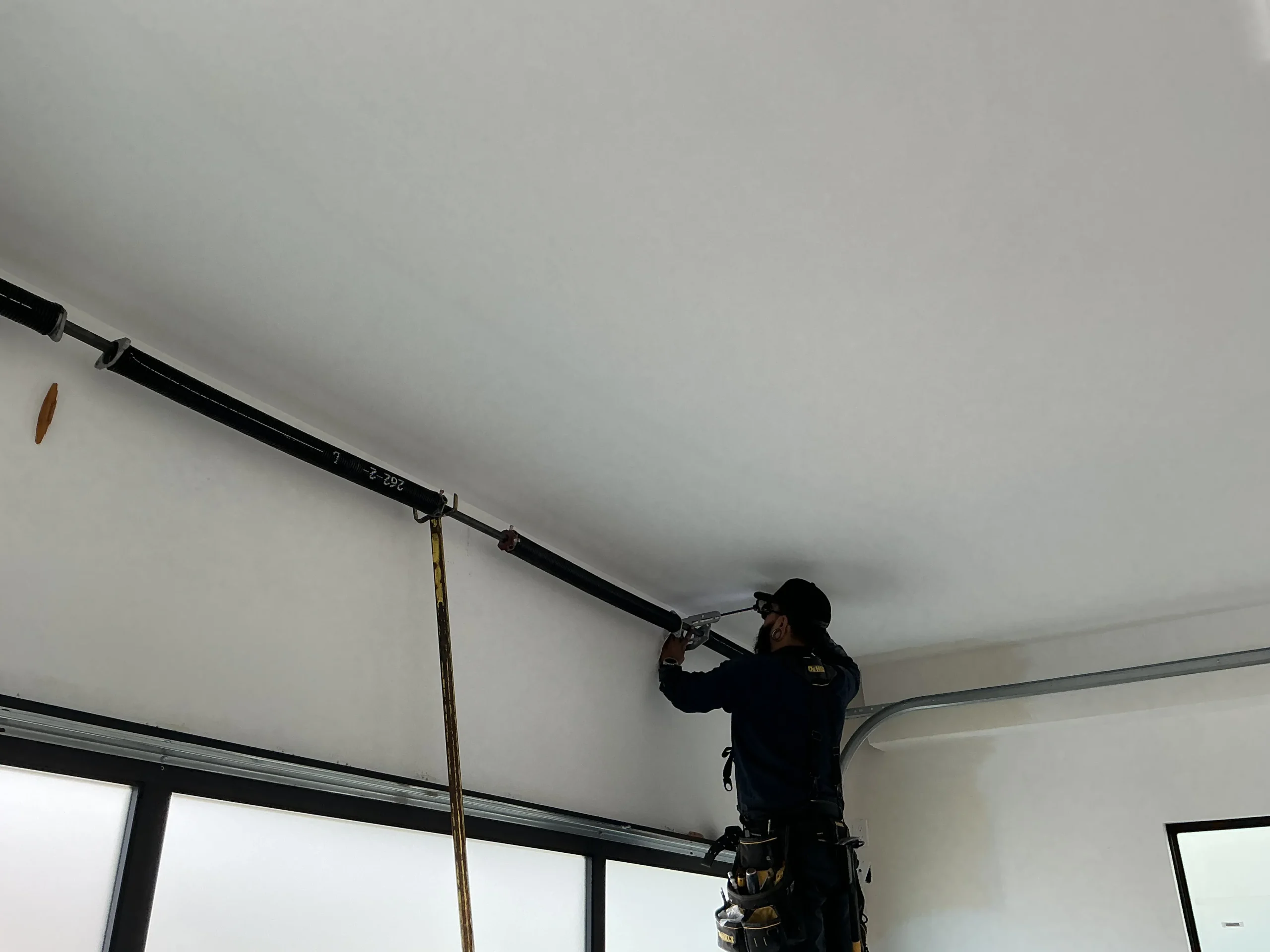
Anaheim homeowners rely on their garage doors every single day. Most people never think about what makes that door go up and down until the moment it stops working.
The torsion spring is the most critical component in the entire garage door system. It stores and releases tension to carry the weight of the door on every single open and close cycle. When it starts to fail, the whole system feels it.
This guide covers the clearest signs that a garage door spring replacement is needed, what to check before calling a technician, and how to keep the spring in good shape for as long as possible.
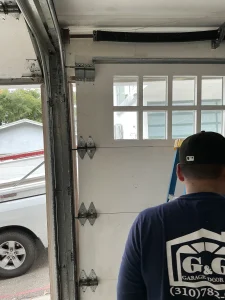
What Is a Torsion Spring and Why Does It Matter?
A torsion spring is a tightly coiled steel spring mounted horizontally above the garage door on a metal shaft. Every time the door closes, the spring winds up and stores mechanical energy. Every time the door opens, it releases that energy to help lift the door.
Most residential garage doors in Anaheim use one or two torsion springs depending on the size and weight of the door. A standard torsion spring is rated for about 10,000 cycles. One cycle equals one open and one close. For a household that uses the garage twice a day, that works out to roughly 13 to 14 years of life under normal conditions.
Lack of maintenance, high heat, and poor ventilation can shorten that lifespan significantly.
Wondering if a failing spring needs immediate attention? Read this next: Is Garage Door Torsion Spring Replacement Urgent?
9 Signs Your Garage Door Torsion Spring Needs to Be Replaced
1. The Garage Door Will Not Open At All
If pressing the opener button produces a humming motor but no movement, a broken torsion spring is the most likely cause. Without spring tension, the opener motor cannot lift the door on its own.
What to check: Look at the spring above the door while it is in the closed position. A visible gap in the middle of the coil means the spring has snapped.
Tip: Do not attempt to force the door open manually. A full-size garage door can weigh anywhere from 150 to 400 pounds without spring assistance.
Understanding what leads to this kind of failure is just as important as spotting it. Find out more in: What Causes Garage Door Torsion Spring Replacement?
2. The Door Opens a Few Inches and Stops
Modern garage door openers are equipped with resistance sensors. When the opener detects that the door is too heavy to lift safely, it stops after just a few inches to prevent damage to the system.
What to check: Pull the red emergency cord to disconnect the opener. Try lifting the door by hand. If it feels extremely heavy or will not stay up on its own, the spring tension is gone.
If a replacement is already on the radar, it helps to know what to expect going forward. Get the full breakdown in: How Long Does Garage Door Torsion Spring Replacement Last?
3. There Was a Loud Bang From the Garage
A torsion spring that snaps under full tension releases all of its stored energy instantly. The result is a sound that many Anaheim homeowners describe as a gunshot or a heavy object hitting the wall.
If that sound was followed by a garage door that stopped working, the spring is broken.
Tip: After hearing that sound, stop using the door and call a professional. The cables may still be in place, but the spring has already failed.
4. The Door Looks Crooked or Uneven While Moving
Garage doors on two-car garages typically have two torsion springs. When only one breaks, the door will still attempt to move but will look tilted or lopsided in motion. One side rises faster than the other, and the cables may pull at an awkward angle.
What to check: Watch the door move from a safe distance. Uneven movement, wobbling, or one side lifting higher than the other are all warning signs.
Tip: Stop using the door immediately, even if it still opens. Running the opener with a broken spring puts serious strain on the motor, cables, and rollers.
5. The Door Drops or Falls Faster Than Normal
A properly tensioned torsion spring controls the descent of the door so it closes at a smooth, steady pace. If the door drops quickly or slams shut, the spring is either broken or has lost its tension.
What to check: Stand to the side and watch the door close. It should lower at a consistent, controlled speed from top to bottom.
Tip: A door that free-falls is a safety hazard for people, pets, and vehicles. Schedule a service call right away.
6. The Cables Look Loose or Have Fallen Off
The torsion spring and the lift cables work as a team. When spring tension disappears, the cables go slack, come off the drums, or pull unevenly on one side of the door.
What to check: Look at the vertical tracks on both sides of the door. The cables should run tight and straight from the bottom bracket up to the drums on the torsion bar. Loose, twisted, or hanging cables point to a spring system failure.
Tip: Loose cables under tension are dangerous. Leave the repair to a licensed technician.
7. The Top Panel of the Door Is Bent or Bowed
When a spring breaks and the opener continues to run, all of the lifting force shifts to the top panel of the door through the cables. That panel can bend, crack, or bow at the corners under that stress.
What to check: Look at the top section of the door for any bending near the upper corners or horizontal creases across the panel.
Tip: Catching a weakening spring early prevents panel damage. Panel replacement in Anaheim adds significant cost to what would otherwise be a straightforward spring job.
8. The Door Fails the Balance Test
The balance test is a quick diagnostic that every Anaheim homeowner should perform two times a year.
How to do it:
- Pull the red emergency cord to disconnect the opener
- Manually lift the door to about waist height (roughly 3 to 4 feet)
- Let go and observe
A properly balanced door should stay in place or move only slightly. A door that drops to the floor or shoots up to the ceiling has a spring tension problem.
Tip: Do this test periodically even when the door seems fine. Knowing what normal feels like makes it easier to catch problems early.
9. The Spring Shows Rust, Gaps, or Visible Wear
A spring does not always fail all at once. In garages with poor ventilation, even in Anaheim’s dry climate, moisture can build up and cause the coils to rust and weaken over time.
What to check: Use a flashlight to inspect the spring closely. Look for:
- Orange rust or discoloration on the coils
- Uneven gaps between coils
- A section of coil that looks stretched or thinner than the rest
Tip: Apply a silicone-based lubricant to the torsion spring every three to six months. This slows rust, reduces friction, and extends the spring’s service life. Avoid WD-40 as it is a degreaser, not a long-term lubricant.
How to Slow Down Torsion Spring Wear
A few simple habits can make a noticeable difference in how long a torsion spring lasts.
- Lubricate the spring every three to six months using a garage door-specific silicone spray or white lithium grease
- Perform the balance test twice a year to catch tension problems before they turn into a full failure
- Schedule an annual professional tune-up that includes spring tension checks, cable inspection, roller lubrication, and hardware tightening
- Ask about high-cycle springs when it is time to replace, springs rated for 25,000 to 50,000 cycles cost more upfront but last far longer than standard options
- Reduce unnecessary cycles when possible by using a side entry door for quick trips in and out of the garage
Why Torsion Spring Replacement Is Not a DIY Job
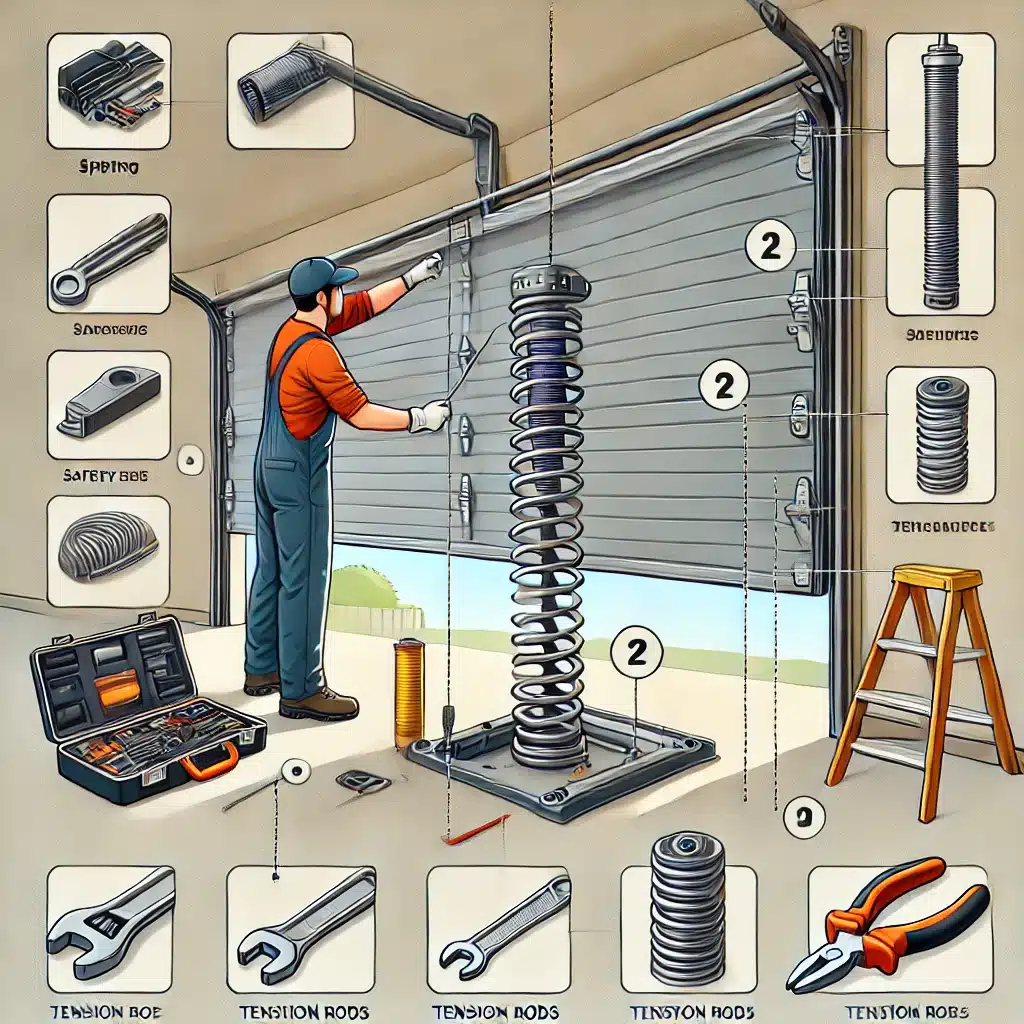
Torsion springs are under extreme mechanical tension at all times, including when the garage door is fully closed. Attempting to remove or install a spring without the proper tools and training is one of the most dangerous home repair mistakes a person can make.
Professional garage door technicians in Anaheim use calibrated winding bars, know the correct torque specifications for different spring sizes, and are trained to handle the risks involved. Any garage door spring repair should always include a full inspection of the cables, drums, rollers, and opener settings after the spring is replaced to confirm everything is working correctly together.
On average, torsion spring replacement falls in the low-to-mid range of garage door repair costs. The final price depends on whether one or two springs are needed, the spring type, door size, and any additional parts like cables or drums. Getting a full inspection before approving any work is always the right move.
Trusted Local Help Is Just One Call Away
G & G Garage Door has built a solid reputation across Anaheim for honest, reliable torsion spring replacement and garage door repair. Every job is handled by experienced technicians who get it done right the first time. Do not wait for a complete failure. Contact us today or give us a call to schedule an inspection and get the garage door working safely again.