




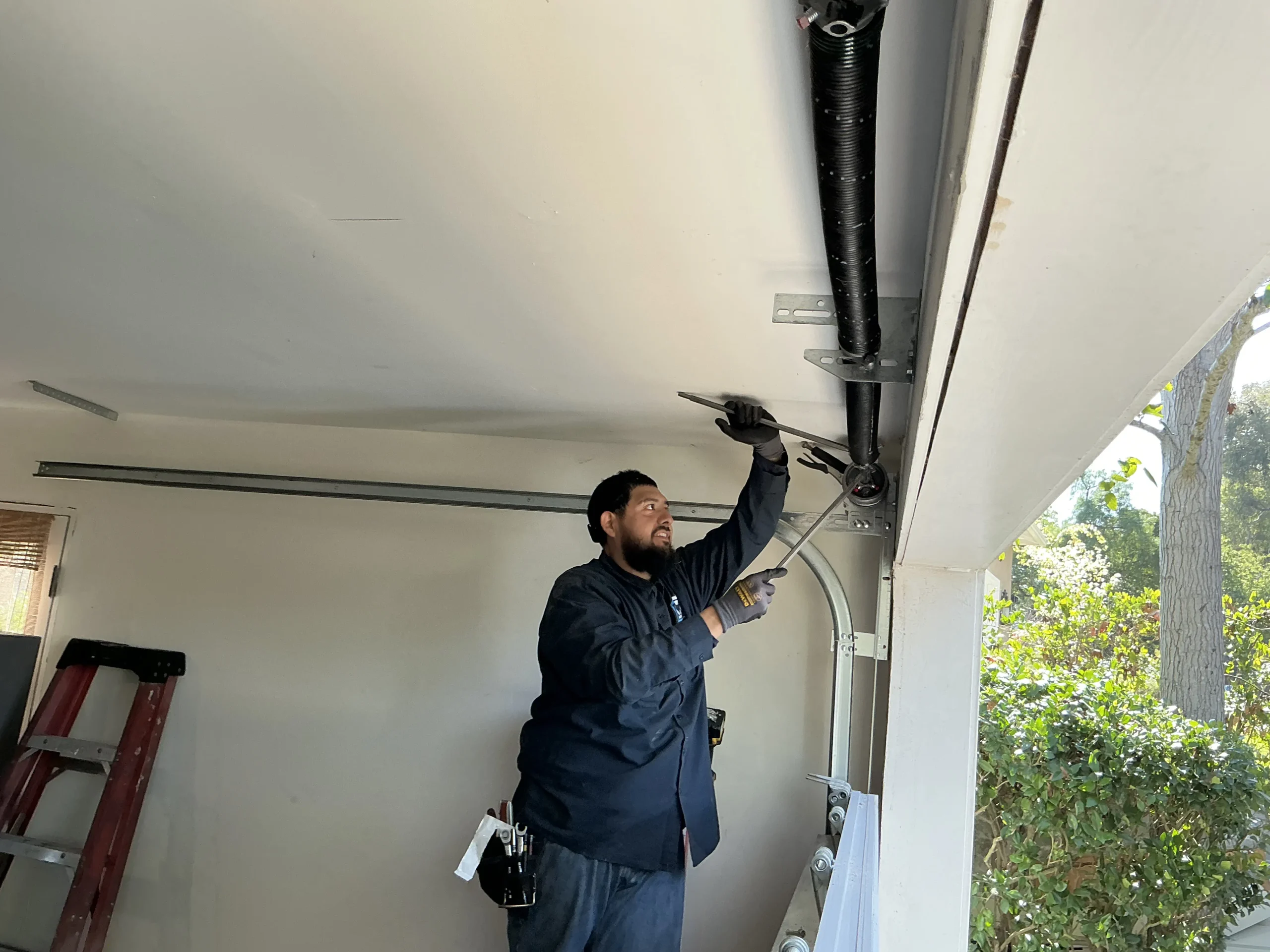
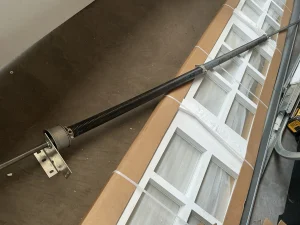
The torsion spring is the large coiled spring mounted horizontally above the garage door. It stores mechanical energy when the door closes and releases that energy to help it open. In simple terms, it does the heavy lifting because garage doors can weigh anywhere from 100 to 400 pounds.
Without a working torsion spring, the garage door opener is doing a job it was never designed to handle alone. The result is a door that either does not move or causes serious damage to the entire system. That is exactly why garage door spring replacement should never be treated as something that can wait.
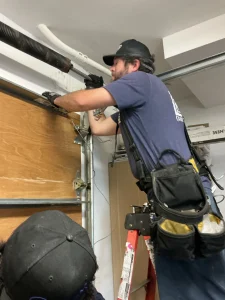
7 Signs Your Torsion Spring Needs Urgent Replacement
1. The Garage Door Will Not Open At All
This is the most urgent sign on the list.
When the opener strains, groans, or lifts the door only a few inches before stopping, a broken torsion spring is almost always the cause. The motor simply cannot lift the full weight of the door without spring support.
What to check: Look above the door at the horizontal spring. A visible gap or separation in the coil means the spring has snapped.
Tip: Stop pressing the opener button. Every attempt puts stress on the motor and can burn it out, turning a spring repair into a much more expensive opener replacement.
For a deeper look at what to expect during the process, check out this helpful read: Garage Door Torsion Spring Replacement: Signs It Is Time.
2. A Loud Bang Came From the Garage
Most Anaheim homeowners describe it the same way: it sounded like a gunshot or something heavy falling off the wall.
That loud bang is the sound of a torsion spring snapping under tension. Torsion springs are wound tightly and hold an enormous amount of stored energy. When they break, it happens fast and loud.
If that sound was followed by a garage door that suddenly stopped working, the spring is broken and needs to be replaced right away.
Pro tip: Springs do not usually break without warning. They wear out gradually over thousands of cycles. The snap is simply the final moment of a spring that had been losing strength for months.
Understanding the root of the problem makes it easier to prevent it from happening again. Find out more in: What Causes Garage Door Torsion Spring Replacement?
3. The Door Looks Crooked or Uneven When Moving
A garage door that tilts to one side when opening or closing is a clear red flag.
Most modern garage doors have two torsion springs, one on each side of the center bracket. When one spring breaks or loses tension, the door becomes unbalanced. One side lifts faster than the other, creating that crooked, jerky motion.
Why it is urgent: An uneven door puts serious stress on the cables, rollers, and tracks. Left unaddressed, additional components will start failing, and the repair bill grows quickly.
What to check: Watch the door move from a safe distance. If it does not rise in a smooth, level motion, the spring tension is off and needs professional attention.
Knowing how long a replacement is expected to last can help with planning ahead. This article covers everything needed: How Long Does Garage Door Torsion Spring Replacement Last?
4. The Door Opens a Few Inches Then Stops
Many garage door openers have a built-in safety feature that detects unusual resistance. If the spring is broken and the door is too heavy, the opener will try to lift it, sense the strain, and stop or reverse.
This is the opener protecting itself from motor damage.
What to do: Pull the red emergency release cord to disengage the opener, then try to lift the door manually. If it feels extremely heavy, like lifting dead weight, the spring is broken or has lost significant tension.
Safety note: Never force a door open if the spring is broken. A door without spring support can drop suddenly and cause serious injury.
5. The Spring Has Visible Rust or Wear
Southern California is drier than most parts of the country, but Anaheim homes with poor garage ventilation or proximity to coastal moisture can still develop rust on torsion springs over time.
Rust weakens the metal coils and significantly shortens a spring’s lifespan. A rusty spring is a spring that is already on its way out.
What to check: Inspect the coils closely. Surface rust, visible corrosion, or uneven gaps between coils are signs that the spring needs attention before it snaps at the worst possible moment.
Prevention tip: Apply a light coat of white lithium grease or a dedicated garage door lubricant to the springs every three to six months. This reduces friction and slows rust development considerably.
6. The Springs Are Over 7 to 10 Years Old
Most standard residential torsion springs are rated for about 10,000 cycles. One cycle equals the door going up and back down once.
For a typical Anaheim household that uses the garage door four times a day, that adds up to roughly 1,460 cycles per year. A standard spring can reach its limit in about seven years.
The math:
- 4 uses per day x 365 days = 1,460 cycles per year
- 10,000 cycles divided by 1,460 = approximately 6.8 years
High-cycle springs rated at 25,000 to 50,000 cycles last much longer, but many homeowners do not know which type was installed in their home.
Tip: If the home is more than eight years old and the springs have never been replaced, schedule a professional inspection before a breakdown happens at the worst time.
7. The Door Is Slow, Sluggish, or Inconsistent
Not every torsion spring problem ends in a dramatic snap. Sometimes the spring has simply lost tension over time. It is not broken, but it is no longer doing its job properly.
Signs of a spring losing tension include:
- The door takes noticeably longer to open or close
- The door hesitates midway through its travel
- The door drifts back down slightly after opening
- The opener sounds louder or more strained than usual
Why this matters in Anaheim: Temperature swings between hot summers and cooler winter nights cause metal to expand and contract. After years of this cycle, springs gradually lose their calibration. It is a slow process, but the effects on door performance are very real.
What to do: Have a technician perform a balance test. A properly balanced door should stay in place without drifting when manually lifted to the halfway point and released.
Is It Ever Okay to Wait?
The short answer is no.
A broken torsion spring is not like a slow-draining sink that can be put off for a few weeks. Here is why acting quickly matters:
- Security risk: A door that will not close properly leaves the home exposed
- Opener damage: Continued use with a bad spring burns out motors and strips gears
- Cable damage: A broken spring often causes cables to snap or unspool, adding to repair costs
- Injury risk: A door without spring support can fall without warning
If the spring has snapped or the door is completely inoperable, same-day or next-day service is the right move.
What Happens During a Torsion Spring Replacement?
Torsion spring replacement is one of the most dangerous garage door repairs due to the extreme tension involved. Professional service is strongly recommended.
Here is what a standard service call looks like:
- Inspection – The technician checks the spring, cables, drums, and opener
- Spring removal – The old spring is safely unwound and removed
- Sizing – The replacement spring is matched to the door’s weight and dimensions
- Installation – The new spring is installed and properly wound
- Balance test – The door is tested for smooth, level operation
- Lubrication – All moving parts are lubricated for long-term performance
Average cost in Anaheim, CA: Torsion spring replacement falls in the average range for single spring jobs and slightly higher for dual-spring systems. Reputable companies provide upfront pricing before any work begins.
How to Extend the Life of Torsion Springs
A little regular maintenance goes a long way, especially in Anaheim where heat, dust, and temperature changes accelerate wear on garage door components.
- Lubricate every 3 to 6 months – Use a garage door lubricant on the spring coils, hinges, and rollers. Avoid WD-40 since it is a solvent, not a lubricant.
- Test door balance twice a year – Disconnect the opener, lift the door halfway manually, and let go. It should stay in place. If it falls or shoots up, the spring tension needs adjustment.
- Listen to the door – New squeaking, grinding, or changes in speed are early warning signs worth taking seriously.
- Schedule annual inspections – A professional tune-up once a year catches worn parts before they cause a breakdown.
- Ask about high-cycle springs – When replacing springs, upgrading to high-cycle options rated at 25,000 or more cycles is a smart long-term investment.
Do Not Wait Until the Door Stops Working
A failing or broken torsion spring is not a problem to put off. For Anaheim homeowners, the combination of regular use, seasonal temperature changes, and the natural wear cycle of garage door components means torsion springs deserve regular attention.
Spotting the warning signs early, keeping up with basic maintenance, and scheduling garage door spring repair at the first sign of trouble is the smartest way to protect the door, the opener, and most importantly, the people using it every day.
Ready to Get It Fixed the Right Way?
G & G Garage Door is Anaheim’s trusted choice for reliable, honest garage door repairs. From torsion spring replacements to full system inspections, the job gets done right the first time. Do not let a broken spring turn into a bigger problem. Contact us today or give us a call to schedule a same-day inspection.