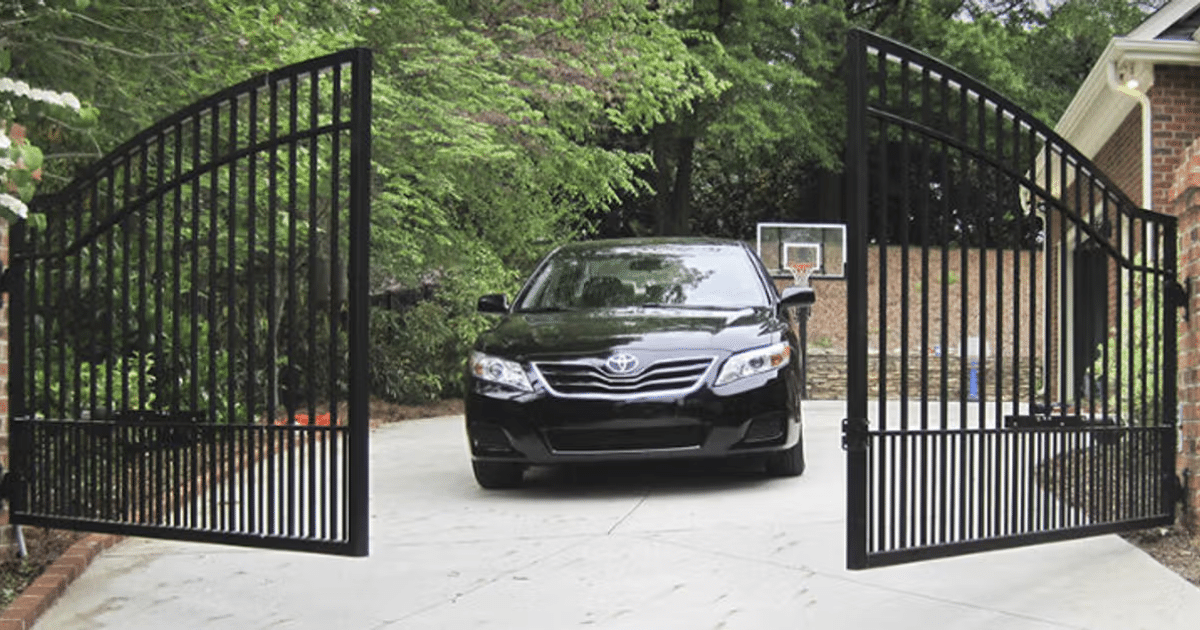



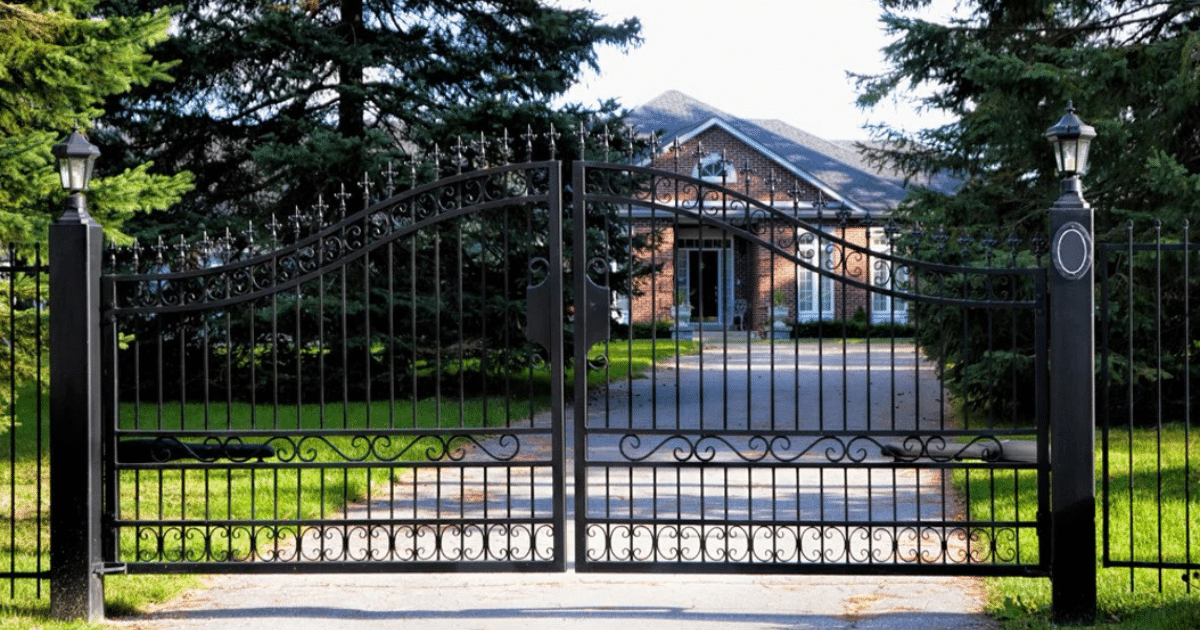
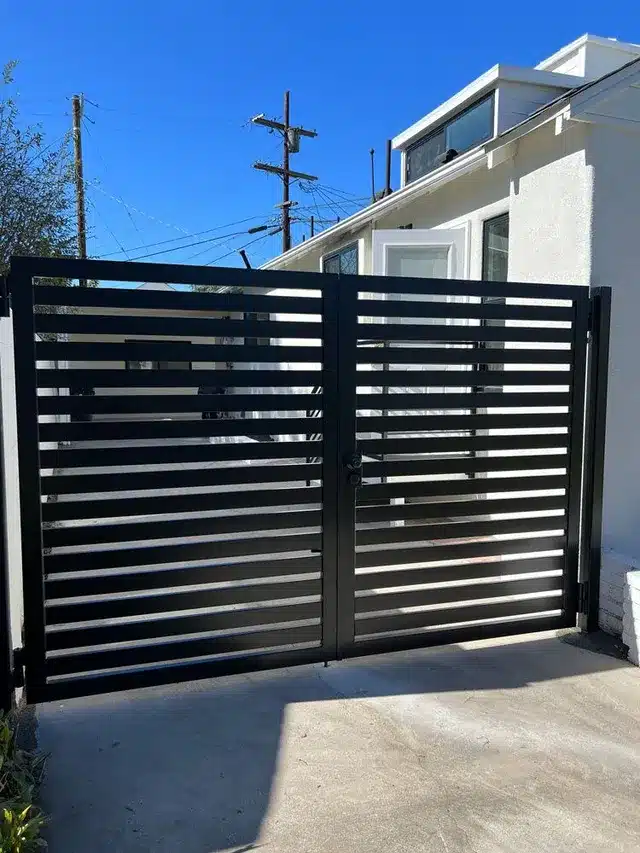
A dual swing gate adds an elegant, classic look to any residential property. The two panels open outward or inward from the center, creating a wide, welcoming entry that works well for driveways, estates, and larger residential lots. But the gate itself is only part of the equation. Without the right opener, even a beautifully built double hinged gate becomes a daily inconvenience.
A dual swing gate opener is what transforms a manual gate into an automated entry system. It handles the work of opening and closing both panels in sync, manages safety features, and connects to your access control setup so you can operate everything from your vehicle or smartphone. For homeowners in Torrance, CA, where driveways and property layouts vary widely, professional gate installation ensures these systems work flawlessly before you install or upgrade one, saving you from costly mistakes.
This guide covers everything you need to know, from how dual swing gate openers work to what separates a reliable system from one that fails after the first rainy season.
What Is a Dual Swing Gate Opener and How Does It Work?
A dual swing gate opener is an automated system designed specifically to operate two gate panels simultaneously. Unlike a sliding gate that moves along a track, a double hinged gate pivots on hinges at each side of the entry. The opener connects to each panel and drives them open and closed in a coordinated sequence.
Most dual swing gate openers use one of two drive mechanisms:
- Linear actuator arms: These are the most common for residential use. A motorized arm extends and retracts to push or pull each gate panel. They are reliable, relatively quiet, and easy to adjust.
- Underground operators: The motor is buried beneath the gate post, making it invisible from the surface. These are more expensive but offer a cleaner aesthetic for high-end residential properties.
- Articulated arm operators: These use a jointed arm design that works well for gates installed close to walls or where a straight actuator arm cannot travel the full arc.
Each gate panel typically has its own motor unit, and the two units communicate with each other or with a central control board to open and close in the correct sequence. This sequencing matters because both panels need to close in the right order for the latch to engage properly.
What Is a Dual Swing Gate Opener Used For? Common Residential Applications
Dual swing gate openers are used wherever a double hinged gate controls vehicle or pedestrian access. In Torrance, CA, the most common residential applications include:
- Driveway entry gates for single-family homes where the homeowner wants an automated entry without the track system that a sliding gate requires.
- Estate and property entrances where the wider opening of a dual swing gate accommodates large vehicles like trucks, trailers, or RVs.
- Side yard access gates are two panels that open to allow equipment or vehicle access to the rear of the property.
- Courtyard entrances for homes with a formal front entry that benefits from the symmetrical appearance of a two-panel gate.
The key advantage of a dual swing gate over a sliding gate in many of these situations is the absence of a ground track. There is no track to keep clean, no rollers to maintain, and no rail running across the driveway surface. The trade-off is that swing gates need clearance space for the panels to travel through their arc, which is not always available on every property.
How to Choose the Right Dual Swing Gate Opener: Key Factors to Consider
Choosing the right opener for a double hinged gate comes down to matching the system to the specific demands of your property. Here are the most important factors to evaluate.
Gate Weight and Size
Every opener is rated for a specific maximum gate weight and panel length. Exceeding that rating puts the motor under constant strain, shortens its lifespan, and leads to unreliable operation. Always know the weight and dimensions of your gate panels before selecting an opener.
Duty Cycle
The duty cycle refers to how many open and close cycles the opener can handle within a given time period before it needs to cool down. A residential gate that opens a few times a day has very different needs from one at an apartment complex with constant traffic. Choose a system with a duty cycle that matches your actual usage.
Power Source
Most residential dual swing gate openers run on standard 110V or 220V AC power. Some systems offer solar-powered or battery backup options, which are worth considering for properties in Torrance where power outages can occur during storm season. A gate that stops working during a power outage is a security and convenience problem.
Opening Speed
Faster is not always better. A gate that opens too quickly can be a safety hazard. Most residential systems operate at a moderate speed that balances convenience with safe operation. Look for systems that allow speed adjustment so you can fine-tune performance after installation.
Weather Resistance
Torrance’s coastal proximity means salt air, occasional heavy rain, and heat are all factors. Choose an opener with a weatherproof housing rated for outdoor use. Sealed motor housings and corrosion-resistant hardware make a meaningful difference in longevity.
Safety Features
Auto-reverse, obstruction detection, and manual release are non-negotiable features for any residential opener. If the gate cannot detect and respond to an obstruction, it is a hazard to vehicles, property, and people.
Types of Drive Systems: Which One Is Right for Your Double Hinged Gate?
The drive system is the mechanical core of any dual swing gate opener. Each type has advantages and limitations that make it better suited to specific gate configurations.
Linear Actuator (Articulating Arm)
This is the most widely installed system for residential double hinged gates. The arm mounts to the gate post and the gate panel, and a motorized screw drive extends and retracts to move the gate. It is straightforward to install, easy to service, and widely available in a range of weight capacities.
- Best for: Gates with at least 12 to 16 inches of clearance behind the hinge post for the arm to mount properly.
- Typical use: Standard residential driveways with panels up to 16 feet long per side.
Underground Operator
The motor housing is buried in a concrete vault beneath the gate post. Only the connection arm is visible above ground. This system requires a more involved installation but produces a completely clean look with no visible hardware.
- Best for: High-end residential properties where aesthetics are a priority.
- Typical use: Estate gates, courtyard entries, properties with strict HOA design guidelines.
Articulated Arm Operator
The jointed arm design allows the gate to open even when wall clearance is limited. It can handle wider arcs and works in tight spaces where a standard linear arm would not fit.
- Best for: Gates installed close to walls, columns, or other structural elements that limit arm travel.
- Typical use: Residential properties with narrow entry columns or masonry posts.
Safety Features Every Dual Swing Gate Opener Should Have
A dual swing gate opener that lacks proper safety features is not just unreliable. It is a liability. These are the features that every residential system should include as standard.
Auto-Reverse Function
If the gate contacts an obstruction while closing, the auto-reverse function immediately stops and reverses the panel. This is the most important safety feature on any automated gate system.
Obstruction Sensors
Infrared or photocell sensors detect objects in the gate’s path before contact is made. The gate stops before it reaches the obstruction rather than making contact first. These should be tested monthly.
Manual Release
In the event of a power failure or motor malfunction, the manual release allows you to disengage the motor and operate the gate by hand. This feature should be clearly labeled and easily accessible to every household member.
Entrapment Protection
Modern systems include entrapment protection that prevents the gate from trapping a person or animal against a wall or post. This is especially important for swing gates because the arc of the panel creates a closing zone that can trap someone who is not paying attention.
Speed Control
Adjustable speed settings allow you to slow the gate down so it does not slam closed or open too aggressively. This protects both the gate hardware and anyone in the vicinity.
For homeowners thinking about how their gate opener fits into a broader property security plan, what is a Perimeter Fence? Everything You Need to Know for Protection and Security provides a helpful look at how fencing and gate systems work together as a complete boundary solution.
Installation Considerations for Dual Swing Gate Openers in Torrance, CA
Installing a dual swing gate opener is not a weekend project for most homeowners. The electrical work, concrete requirements, and precise alignment involved mean that professional installation is almost always the better choice. That said, knowing what goes into the process helps you ask the right questions and understand what you are paying for.
Electrical Supply
The opener needs a dedicated power supply run to the gate post location. If your gate is far from your main electrical panel, trenching and conduit work may be required. A licensed electrician should handle this portion.
Post Strength
The hinge posts take the full weight and movement stress of the gate panels, plus the motor arm. If the posts are not set in deep concrete footings, the repeated stress of operation will cause them to shift over time, throwing the gate out of alignment.
Gate Alignment
Both panels need to be perfectly plumb and level before the opener is installed. If the gate sags or is misaligned, the opener will compensate by working harder than it should, which accelerates wear on the motor and drive arm.
Conduit and Wiring
All wiring between the control board, motor units, safety sensors, and access control devices should be run through weatherproof conduit. Exposed wiring is vulnerable to moisture, pests, and physical damage.
Local Codes
In Torrance, automated gate installations may require permits depending on the scope of work involved. Check with the City of Torrance Building and Safety Division before beginning installation to confirm what approvals are needed.
For homeowners who already have a sliding gate on the property and are considering how the two gate types compare for their overall setup, Sliding Gate Components: Key Parts, Security & Maintenance Tips breaks down the hardware differences that affect installation and long-term maintenance decisions.
Maintenance Tips for Dual Swing Gate Openers
A dual swing gate opener that is regularly maintained will outlast one that is only serviced when something breaks. Here is a practical schedule to follow.
Monthly:
- Test the auto-reverse function by placing a solid object in the gate’s path during closing.
- Check the obstruction sensor alignment and clean the sensor lenses.
- Listen for any new sounds during operation, such as grinding, clicking, or hesitation.
- Test all entry methods including remote, keypad, and any smartphone integration.
Every Three to Six Months:
- Inspect the actuator arms for any signs of bending, corrosion, or loose mounting hardware.
- Check all pivot points and lubricate with a silicone-based lubricant.
- Inspect the gate panel alignment. If the panels have shifted, recalibration may be needed before the motor is put under further strain.
- Check the control board housing for moisture intrusion, especially after heavy rain.
Annually:
- Schedule a professional inspection of the full system, including motor performance, wiring condition, and hardware wear.
- Test the manual release mechanism to confirm it disengages smoothly.
- Review access control settings and update entry codes.
- Check the condition of hinge posts and their concrete footings.
Tips to avoid common problems:
- Do not force the gate manually when the motor is engaged. This is one of the most common causes of drive arm damage.
- If one panel moves faster than the other, the synchronization settings need to be adjusted before it causes the panels to collide at closing.
- Keep the area beneath and around the gate clear. Objects left in the swing path cause repeated auto-reverse cycles that wear out the motor over time.
According to the Door and Access Systems Manufacturers Association, proper installation and regular maintenance are the two biggest factors in the long‑term reliability of automated gate systems. For industry standards and guidance on automated gate safety, the DASMA resources on gate‑system safety and standards are a reliable reference for homeowners evaluating opener systems.
Common Problems With Dual Swing Gate Openers and What They Usually Mean
Even a well-maintained system will occasionally have issues. Knowing what different symptoms point to helps you describe the problem accurately when you call a technician, and gives you a better sense of urgency.
- One panel opens, but the other does not: This usually points to a failed motor unit on one side, a wiring fault, or a blown fuse in the control board for that panel.
- The gate opens but will not close: Check the obstruction sensors first. A misaligned or dirty sensor will hold the gate open as a safety default.
- The panels close but do not latch: The closing sequence may need recalibration, or the latch hardware itself may need adjustment. Both panels need to arrive in the correct position and order for the latch to engage.
- The gate moves slowly or struggles: This often indicates motor strain from a gate panel that has shifted out of alignment, a drive arm that needs lubrication, or a motor nearing the end of its service life.
- The remote control range has shortened significantly: This points to a dying battery, antenna damage on the receiver, or radio frequency interference from a nearby device.
- The gate reverses immediately after starting to close: A sensor triggering falsely or a motor detecting resistance it is not supposed to encounter is usually the cause.
Most of these problems are straightforward for a qualified technician to diagnose and repair. The key is not to ignore them. A gate that is working around a problem tends to make that problem worse over time. For more troubleshooting tips, see this guide Common problems with swing gate openers resolved.
The Right Opener Makes All the Difference
A dual swing gate opener is one of the most used pieces of hardware on your property. It operates every time a vehicle enters or leaves, every day, in all kinds of weather. Choosing the right system for your double hinged gate, having it installed correctly, and keeping up with routine maintenance are the three things that separate a gate that works reliably for 15 years from one that causes constant headaches.
Understanding what a dual swing gate opener is, how it works, and what to watch for puts you in a much stronger position as a homeowner. You know what questions to ask, what warning signs to act on, and what a professional inspection should actually cover.
If your dual swing gate opener needs a repair, an upgrade, or a full installation in Torrance, CA, G&G Garage Door has the experience to handle it right. Our team works with all major opener systems and gate configurations across residential properties in the area. Contact us or give us a call, and we will make sure your gate runs the way it should, every single time.