





You press the button, the opener hums, but the garage door just sits there and does not move. Or it lifts an inch or two and stops dead in its tracks. That moment is frustrating, especially when already running late or trying to get the car out in the middle of a busy Anaheim morning. The truth is, a broken garage door spring is one of the most common reasons a garage door refuses to open, and it happens to homeowners all across Anaheim and Orange County every single day.
The problem is, most people do not know what a broken spring looks like, what caused it, or what to do next. This guide covers all of that in plain language, with no confusing technical jargon, just clear and practical information from someone with deep experience in garage door maintenance right here in Southern California. By the end, the signs to look for, what to check, and when to call a professional will all be crystal clear.
What Does a Garage Door Spring Actually Do?
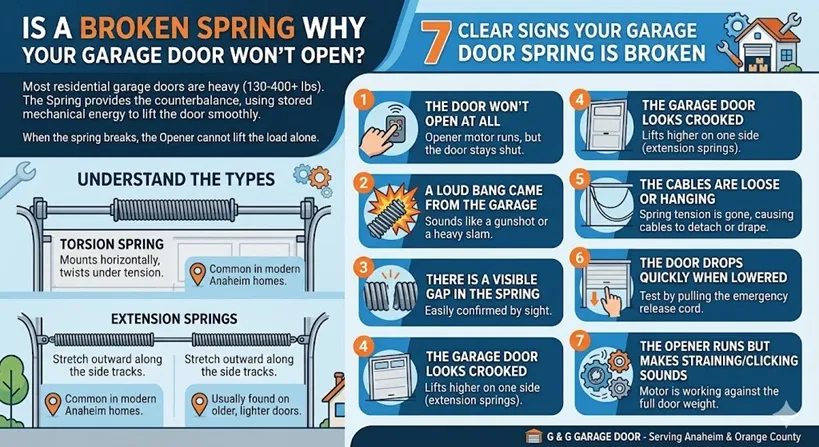
Before getting into the warning signs, it helps to understand the role the spring plays in the first place. A standard garage door is not light. Depending on the material and size, most residential garage doors weigh anywhere from 130 to over 400 pounds. Steel doors, wood doors, and insulated doors all carry different weights, but none of them is something a motor can easily handle alone. That is where the spring comes in. The spring is part of the counterbalance system, which stores mechanical energy and uses that energy to offset the weight of the door.
When the spring is doing its job, the door opens and closes smoothly because the spring is carrying most of the load, and the opener motor barely has to work. When the spring breaks, that counterbalance disappears entirely. The opener is now trying to move hundreds of pounds without any help, and most residential openers are simply not designed for that kind of load. The result is a door that stops moving or refuses to open at all.
If the garage door is acting up in other ways beyond a broken spring, the guide Garage Door Won’t Open or Respond? Here’s What’s Going Wrong covers all the other possible causes worth checking.
The Two Types of Garage Door Springs
Torsion Springs
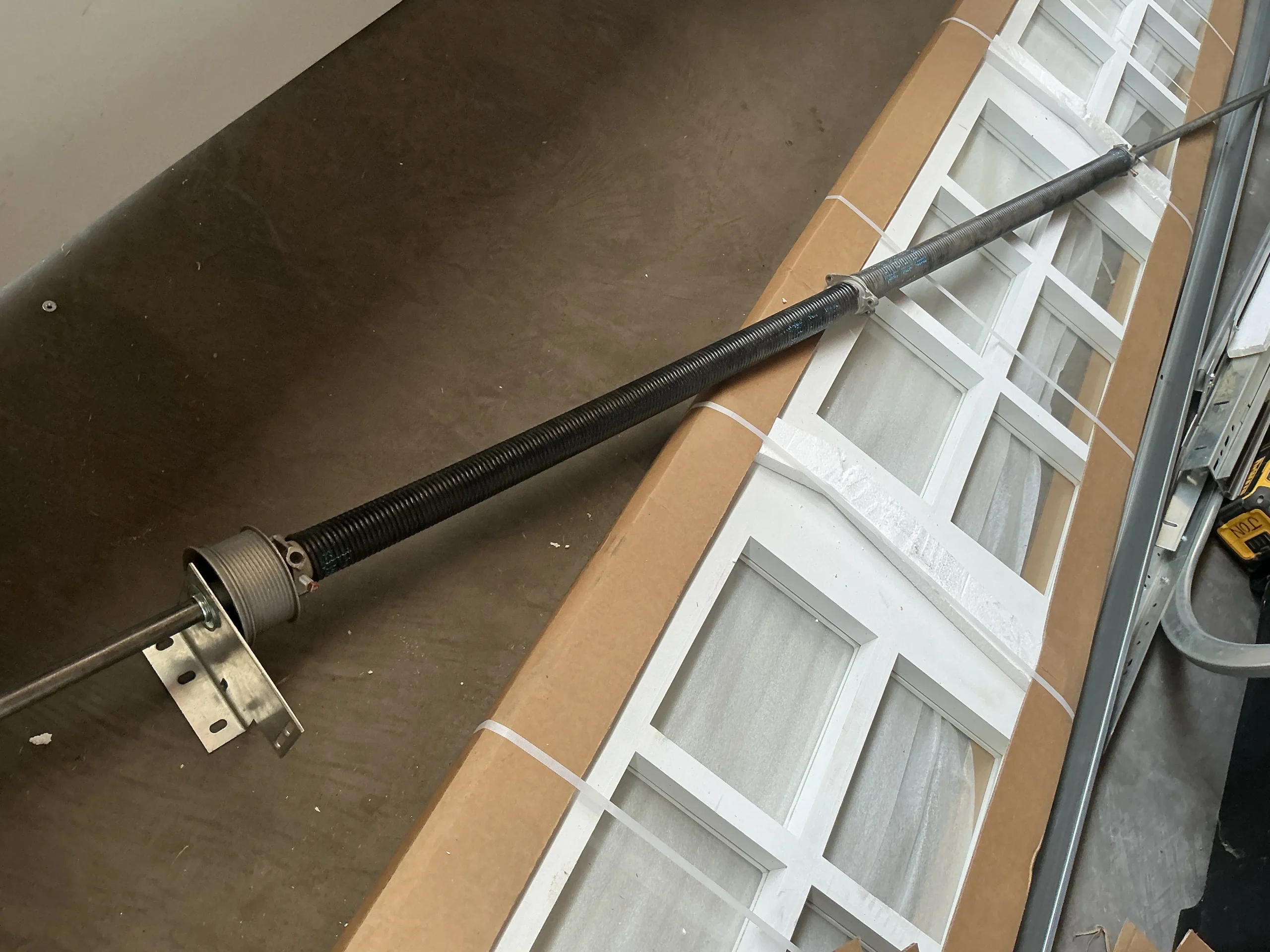
Torsion springs are mounted horizontally above the garage door opening on a metal rod. They work by twisting under tension, which creates the energy needed to lift the door. Most homes in Anaheim built in the last two to three decades use torsion spring systems. They are generally more durable and have a longer cycle life than the alternative.
Extension Springs
Extension springs run along the sides of the door above the horizontal tracks. They stretch outward as the door closes and contract as it opens. Older homes and lighter doors commonly use extension spring systems. These springs are usually found in pairs, one on each side of the door.
Knowing which type of spring is on the door can be helpful when describing the issue to a technician.
For homeowners in Anaheim who notice the garage door struggling specifically during cooler months, the guide Why Won’t My Garage Door Open in Cold Weather? It is worth a read to understand how temperature affects spring performance.
7 Signs Your Garage Door Spring Is Broken
1. The Garage Door Will Not Open At All
This is the most obvious sign of a broken spring. The opener runs, you can hear the motor working, but the door does not move. Not an inch.
When a torsion spring snaps, the counterbalance that the opener depends on is gone. Many modern openers actually have a built-in protection feature that prevents the motor from forcing a door open without adequate spring tension. So the door simply stays shut.
This is not an opener malfunction. This is almost always a spring problem.
If the door still refuses to open even after the spring has been inspected and looks intact, the guide Are Misaligned Sensors Why Your Garage Door Won’t Open? breaks down another common culprit that is worth checking next.
2. A Loud Bang Came From the Garage
Homeowners in Anaheim describe this sound in very similar ways. It sounds like a gunshot. It sounds like someone slammed into the garage door from the outside. It wakes people up in the middle of the night.
That loud bang is the sound of a torsion spring snapping under extreme tension. These springs are wound incredibly tight. When they reach the end of their life and finally snap, all of that stored energy releases at once, and the sound is dramatic.
If a loud bang came from the garage recently, especially at a time when no one was near the door, go take a look at the spring. There is a strong chance it snapped.
Important: Do not try to open the door after hearing that sound. More on that in the safety section below.
3. There Is a Visible Gap in the Spring
This is one of the easiest signs to confirm with your own eyes.
Go inside the garage with the door in the closed position. Look up above the door at the torsion spring on the metal rod. A broken torsion spring will show a clear gap in the coil, usually about one to two inches wide. It looks like the spring has been pulled apart at a certain point.
Extension springs may look stretched out, bent, or completely unhooked from one end.
Either way, a visible gap or separation is a clear confirmation that the spring has failed.
4. The Garage Door Looks Crooked or Lopsided
If only one spring fails in a system that uses two extension springs, the door may still attempt to move, but will appear tilted or uneven. One side rises higher than the other, and the door looks like it is hanging at an angle.
This happens because the working spring on one side is still generating tension, while the broken side has none. The result is an unbalanced door that can quickly cause additional problems.
Do not keep operating the door when it looks crooked. A lopsided door can jump off the tracks, damage the cables, and turn what would have been a straightforward spring replacement into a much more expensive repair involving cables, rollers, and tracks.
5. The Cables Are Loose or Hanging
Garage door cables and springs work as a team. The cables are kept taut by the tension the spring provides. When the spring breaks, that tension disappears, and the cables go slack.
Signs of loose or failed cables include:
- A cable hanging loosely on one or both sides of the door
- A cable that has come off the drum or the bottom bracket
- Coiled cable sitting on the garage floor near the sides of the door
Loose cables are a secondary symptom. The root cause is almost always the spring. But if you see hanging cables, that is a clear signal that the spring-and-cable system needs professional attention right away.
6. The Door Drops Quickly When Lowered Manually
Here is a quick test you can perform safely without touching the spring itself.
Pull the red emergency release cord hanging from the opener track. This disconnects the door from the opener motor. Now try to gently lower the door by hand.
A door with healthy spring tension will lower slowly and feel somewhat controlled. It will not fight you, but it will not just fall either.
A door with a broken spring will drop fast the moment you ease up. It may slam shut with very little resistance. This is because the counterbalance is gone and gravity is doing all the work.
A door that drops freely is also a serious safety hazard. It can damage property or injure anyone underneath it.
7. The Opener Runs but Makes a Straining or Clicking Sound
Sometimes the door does not move at all, but the opener motor keeps running, and you hear straining, clicking, or grinding sounds. This happens when the motor is working against the full weight of the door with no spring support.
If this continues for too long, the opener motor can overheat or burn out, turning a single spring replacement into a spring plus opener repair.
If the opener is running but nothing is happening, cut the power to the unit and call a technician. Do not keep hitting the remote button, hoping the door will eventually cooperate.
How to Avoid a Broken Garage Door Spring
Garage door springs are not built to last forever. Standard springs are typically rated for around 10,000 cycles, where one cycle equals one open and one close. For a household that uses the garage door four times a day, that works out to roughly six to seven years before the spring reaches the end of its rated life.
The good news is that in Anaheim’s relatively mild climate, springs can hold up well compared to regions that deal with extreme cold or heavy humidity. But they still wear out. Here are practical ways to extend spring life and catch problems before they turn into emergencies.
Lubricate the Springs Every Six Months
Use a dedicated garage door lubricant, not WD-40, on the springs, hinges, rollers, and cables twice a year. Lubrication reduces friction, slows corrosion, and can meaningfully extend the lifespan of the spring. A can of garage door lubricant is inexpensive and easy to apply.
Schedule an Annual Professional Tune-Up
A trained technician can identify a spring that is getting worn, stretched, or corroded before it snaps completely. Most garage door companies in the Anaheim area offer maintenance tune-ups that include a full system inspection. Catching a failing spring early is far cheaper than dealing with a broken one.
Pay Attention to Early Warning Signs
A door that is slowing down, making new noises, or requiring more force to open manually is sending a signal. These are not just minor annoyances. They are early signs that spring tension is decreasing and a failure may be coming.
Ask About High-Cycle Springs
When a spring is being replaced, ask the technician about upgrading to high-cycle springs rated for 25,000 to 100,000 cycles. They cost a bit more upfront but can last two to three times longer than standard springs, saving money and hassle in the long run.
Test the Door Balance Periodically
Disconnect the opener using the red release cord. Manually lift the door to about waist height and let go. A properly balanced door will stay in place or move only slightly. If it drops to the floor or shoots upward, the spring tension is off, and a technician should take a look.
Why Fixing a Broken Spring Is Not a DIY Job
This part deserves serious attention.
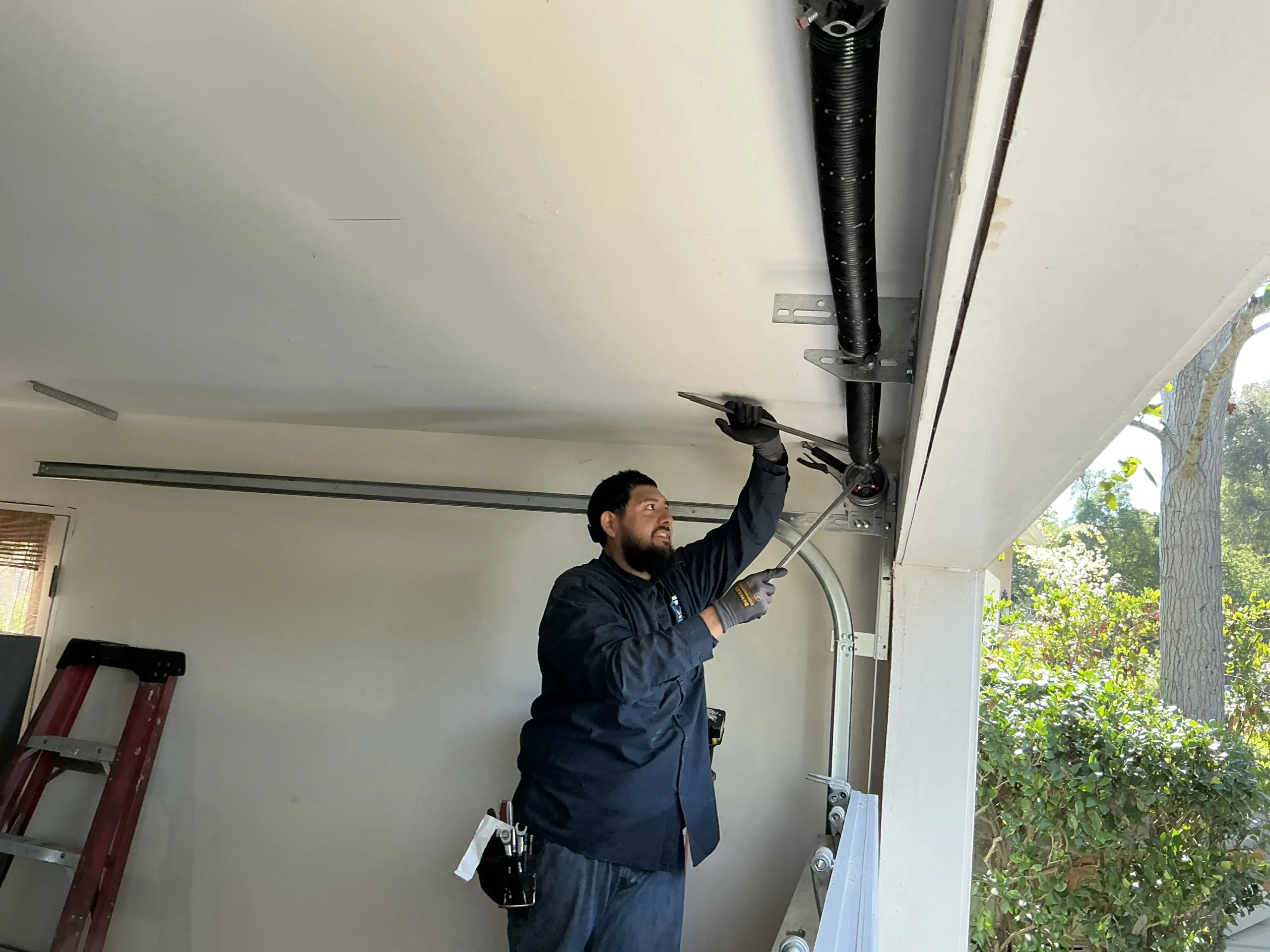
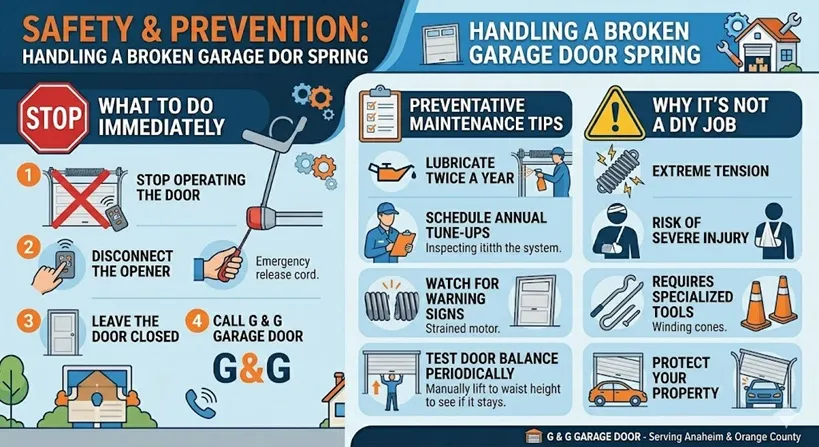
Torsion springs are under extreme mechanical tension. The amount of stored energy in a wound torsion spring can be dangerous if that energy is released suddenly and without control. Injuries from DIY spring repairs range from serious lacerations to broken bones. In the most severe cases, fatalities have been reported.
This is not an exaggeration meant to scare anyone. It is a genuine safety reality that every experienced garage door technician understands well.
What can be done safely at home:
- Visually inspect the spring from a safe distance with the door closed
- Disconnect the opener using the red emergency cord
- Keep the door closed and avoid forcing it open
- Contact a licensed garage door repair professional
What should never be attempted without proper training and tools:
- Winding or unwinding a torsion spring by hand
- Attempting to reattach or replace an extension spring without cable containment devices
- Forcing the door open repeatedly after a spring has broken
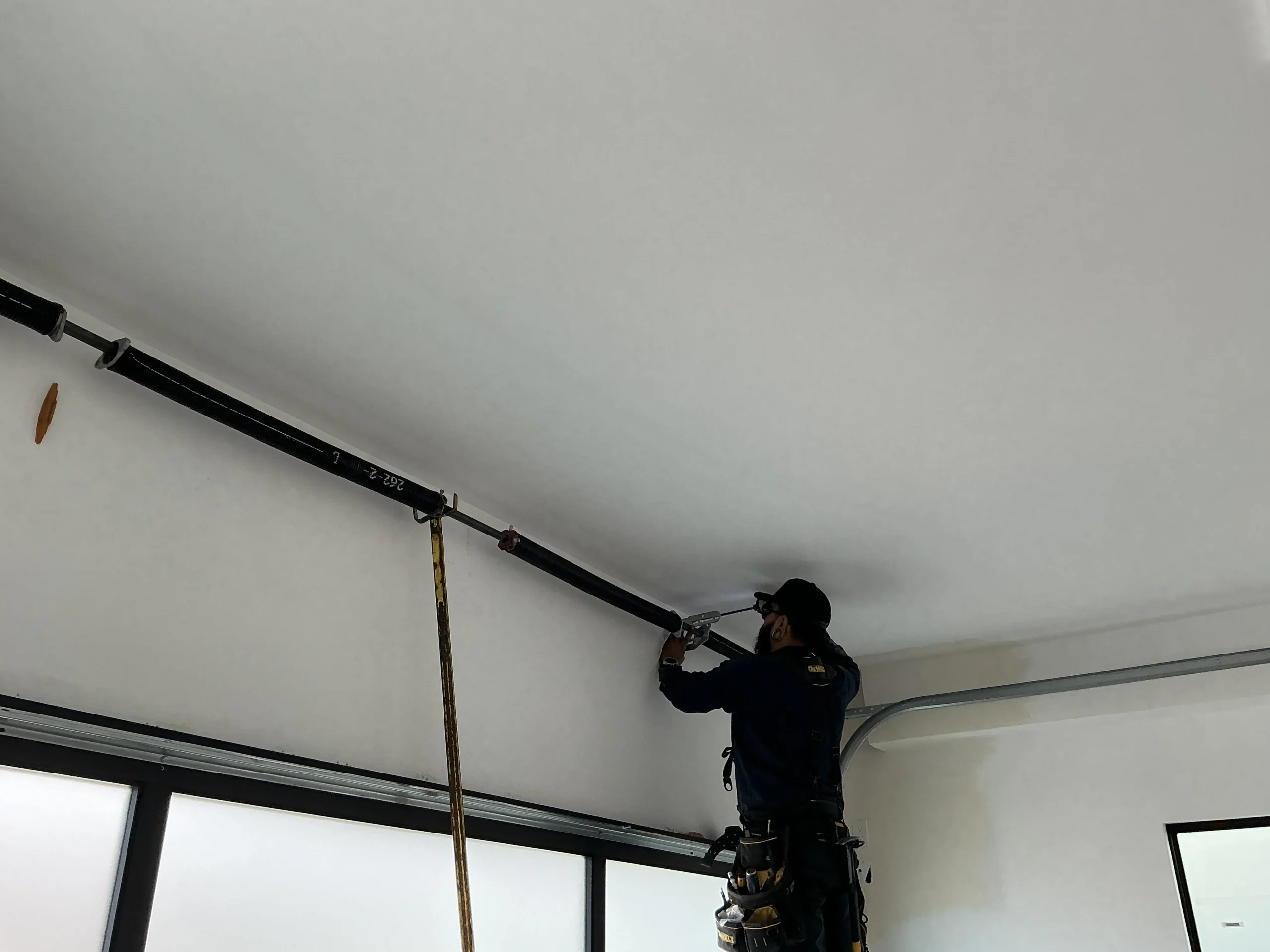
Leave spring replacement to licensed, insured professionals. It protects personal safety and protects the door system from further damage.
What to Do When the Spring Breaks in Anaheim, CA
Here is a straightforward action plan for dealing with a broken garage door spring.
Step 1: Stop Using the Door
The moment a broken spring is suspected, stop operating the door. Do not press the opener button again. Do not try to force it up manually. Leave it in the closed position.
Step 2: Disconnect the Opener
Pull the red emergency release cord hanging from the opener track. This separates the door from the motor, so the opener is no longer straining against the weight of the door.
Step 3: Call a Local Anaheim Garage Door Repair Company
Look for a licensed and insured garage door technician who has experience with spring replacement. Many reputable companies in the Anaheim and Orange County area offer same-day service and emergency appointments.
Step 4: Ask About Spring Upgrades
When the technician arrives, ask whether the existing springs can be upgraded to a higher cycle rating. Given how often garage doors are used in busy Southern California households, the upgrade is often worth it.
On Average Cost: Spring replacement in the Anaheim, CA area runs at an average cost that varies based on the type of spring, whether one or both springs need replacing, and the condition of cables and hardware. Always request a written estimate before any work begins.
A Broken Spring Is Serious but Do Not Panic
A broken garage door spring is one of the most common garage door problems facing homeowners in Anaheim, CA, but it is also one of the easiest to fix. If the door stopped opening, a loud bang came from the garage, the spring has a visible gap, the door looks lopsided, or the opener is straining without any door movement, a broken spring is the most likely cause. The priority is to stop using the door, disconnect the opener, and call a trusted local garage door repair company. Most reputable technicians in the Anaheim and Orange County area can handle spring replacement the same day.
Do not wait for this repair. A broken spring puts extra stress on the opener motor, cables, and tracks every time the door is forced to operate. The longer it goes unaddressed, the more likely a simple spring job turns into a bigger, more expensive repair that could even lead to a full garage door replacement. Contact a licensed garage door repair professional in Anaheim, CA, today and get the door back to working safely and reliably.
Trusted Garage Door Repair in Anaheim, CA
When it comes to trusted garage door repair in Anaheim, CA, G & G Garage Door has built a strong reputation for fast, reliable, and honest service across Orange County. From broken spring replacements to full system inspections, our team brings the experience and expertise needed to get the job done right the first time. Homeowners throughout Anaheim trust us because the work is done with care, the pricing is straightforward, and the results speak for themselves. Contact us today or give us a call and get the garage door working safely and reliably again. Same-day service is available for Anaheim and the surrounding Orange County areas.
Frequently Asked Questions
[sp_easyaccordion id=”10854″]