





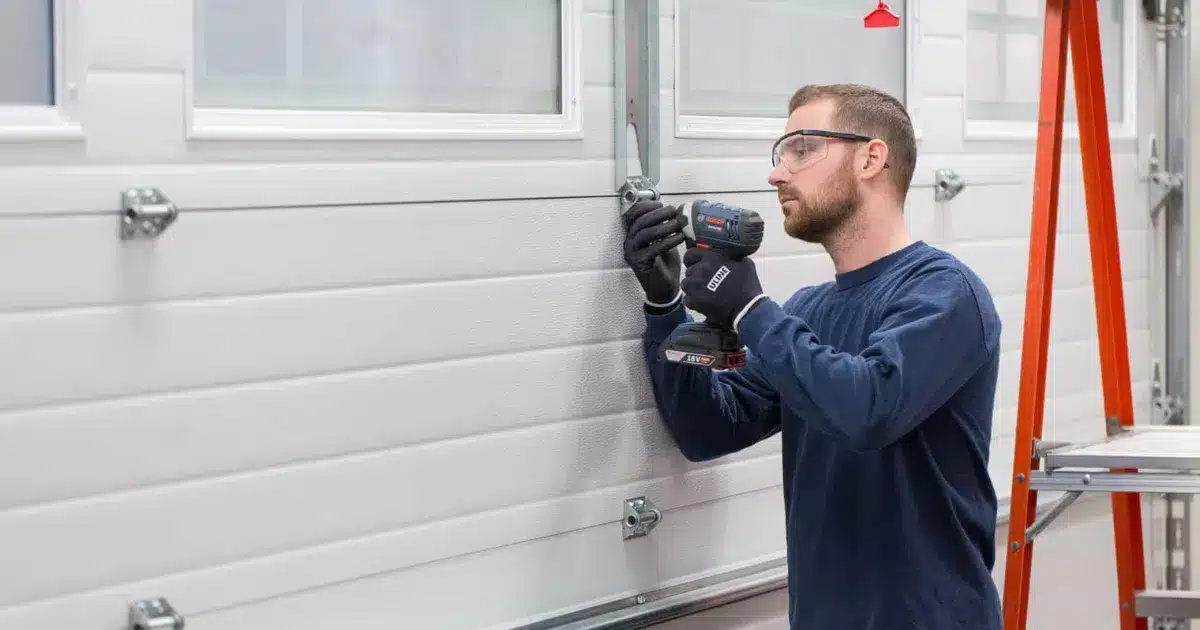
Residential garage door installation services cover far more than attaching door sections and leaving the opener to do the hard work. A garage door, including its garage door springs, is a heavy moving system that relies on correct track alignment, proper balance, and safety testing. When the setup is done correctly, the door travels smoothly, seals evenly, and the opener runs without strain during daily use.
Homeowners schedule garage door installation for many reasons, including remodeling, storm damage, worn panels, and repeated residential garage door repair visits. Since every garage has a different clearance, framing, and hardware history, the service scope can vary.
What Residential Garage Door Installation Services Usually Include
Most residential garage door services follow a consistent order because each phase depends on the one before it. Even when the door style changes, the system still needs the same core work: confirm the opening, set the track layout, assemble the door, balance the lift system, connect the opener, and test safety.
If you are planning timing before booking, read When Should You Schedule Residential Garage Door Installation.
Arrival Checks And Measurement Confirmation
Before any installation work begins, the space is verified to ensure the door and track layout align with the garage.
These checks commonly include:
- Opening width and height verification
- Headroom measurement above the opening
- Side clearance checks near the jambs
- Backroom depth checks for full door travel
- Floor level checks at the threshold for seal contact
- Condition check of the framing where the brackets will mount
- Opener location review and outlet access confirmation
Why this matters:
- Track alignment depends on square reference points
- A door that is not centered can rub and bind
- A floor that slopes can affect the bottom seal contact
- Clearance limits may require a different track setup
If the opening is out of square or the framing is weak, it does not stop the project, but it can change the work needed to create a stable installation.
Old Door Removal During Garage Door Replacement
If the project is a garage door replacement, old door removal is part of the service. This phase takes careful handling because springs and cables carry high tension.
Removal commonly includes:
- Disconnecting the opener from the door
- Securing the door to prevent sudden movement
- Releasing spring tension using the correct tools and steps
- Removing door sections in a controlled order
- Removing old tracks, brackets, and worn support hardware
- Clearing mounting points so new hardware can seat correctly
Common factors that add time during removal:
- Rusted fasteners that resist removal
- Bent tracks that are difficult to detach
- Old hardware mounted into weak or patched wood
- Multiple layers of added brackets from past repairs
- Damaged panels that shift and bind during separation
If your door has had repeated residential garage door repair visits, the removal phase often shows why repairs kept returning, especially when old hardware has shifted over time.
Track Installation And Alignment
Track layout is one of the most important parts of the whole job. When tracks are not square and stable, the door can feel noisy, uneven, or unpredictable, even if the door panels are new.
Track work often includes:
- Installing vertical tracks and jamb brackets
- Setting flag brackets and connection points
- Installing horizontal tracks and ceiling supports
- Confirming track spacing to keep the door centered
- Confirming plumb alignment so the door does not drift
- Securing hangers to prevent track sag over time
- Checking roller travel for smooth movement
Common reasons track work requires extra adjustment:
- Limited headroom that changes the angle of horizontal tracks
- Obstructions like pipes, beams, or storage platforms
- Uneven framing that shifts where brackets can mount
- Garage layouts that need added ceiling support points
A stable track layout supports smoother travel, quieter operation, and better sealing at the opening.
Door Assembly And Hardware Installation
Once tracks are installed and stable, the door is assembled section by section. This phase has visible progress, but alignment still matters because small errors can turn into larger issues as the door stacks upward.
Door assembly commonly includes:
- Setting the bottom section and confirming level placement
- Installing bottom brackets and roller carriers
- Installing hinges, rollers, and side hardware
- Stacking middle sections and securing hinge points
- Installing the top section and top fixtures
- Adding struts or reinforcement when included
- Confirming the door sits centered and square in the opening
Key details checked during assembly:
- Panel alignment so the door does not twist during travel
- Even hinge movement so sections fold smoothly
- Side clearance so rollers travel freely
- Bottom seal contact across the width
- The top section is fitted to reduce gaps near the header
If the door is not assembled squarely, it can rattle during travel, which can create noise, opener strain, and earlier service needs.
Spring System Setup And Cable Routing Under High Tension
Spring and cable setup is one of the most safety-critical steps. The spring system must match the door’s weight and height. If the lift system is not matched correctly, the door can feel heavy, drift, or overload the opener.
Spring and cable setup often includes:
- Installing torsion shaft components
- Installing spring hardware and bearing plates
- Installing drums and routing lift cables
- Setting equal cable tension on both sides
- Winding springs to the correct turn count
- Securing set screws and confirming seating
- Performing balance checks before the opener connection
Balance checks typically confirm:
- The door lifts smoothly by hand
- The door stays in place when opened partway
- The door does not slam down or drift upward
- Cable tension is even on both sides
A balanced door reduces opener strain and supports smoother daily operation. This is also a key reason why professional residential garage door installation can reduce unexpected breakdowns compared to rushed setups.
Opener Connection Or Opener Installation When Included
Some installations include reconnecting an existing opener. Others include installing a new opener. Either way, the opener setup is not only about making the motor run. It is about making sure the opener is moving a balanced door safely.
Opener-related work may include:
- Securing the header bracket and rail support
- Connecting the opener arm to the door
- Setting travel limits and force settings
- Aligning safety sensors
- Confirming wall control operation
- Confirming remote and keypad operation when present
- Testing smooth starts and stops through full travel
Common situations that extend the opener work:
- The opener is older and struggles under load
- The opener bracket needs reinforcement
- Sensors must be relocated due to track changes
- Wiring needs a minor adjustment for safe routing
- Travel limits require careful tuning for even closure
If you want a clearer view of what affects appointment length, read How Long Does Residential Garage Door Installation Take.
Safety Testing And Final Inspection
Installation is not complete until safety checks and performance checks are done. This step protects daily use and helps confirm the system will behave predictably.
Final testing typically includes:
- Photo-eye sensor alignment checks
- Auto-reverse testing
- Multiple open and close cycle tests
- Door travel checks for smooth motion and quiet operation
- Hardware fastener checks for secure fit
- Seal checks at the floor and along the sides
- Manual release check so the door can be operated safely if needed
- Cleanup and final walkthrough
If any part of the travel looks uneven, adjustments are completed before the job is considered finished.
Understanding how weather changes affect garage door performance, such as materials contracting, moisture effects, debris buildup, and lubrication issues, can help homeowners plan installation timing and maintenance more effectively.
What May Be Added Based On Your Garage And Door Choice
Some garages need added steps for a correct fit and safe operation. These are common additions that depend on the garage layout, the door weight, and the condition of existing framing and hardware.
Track Layout Changes For Low Headroom Or Tight Clearance
Limited clearance may require a modified track setup. This can add time, but it often improves travel and prevents rubbing or binding.
Track layout changes may be needed when:
- Headroom is limited above the opening
- Storage platforms or ceiling features reduce space
- Ducts or pipes cross the track path
- The garage has unusual framing near the header
A corrected track layout supports better door travel and more consistent sealing.
Framing Reinforcement At Mounting Points
Tracks and brackets must mount into stable framing. If mounting points are weak or patched, reinforcement may be needed.
Reinforcement work can include:
- Securing mounting surfaces where brackets attach
- Adding stable anchor points for track supports
- Correcting minor out-of-square conditions
- Confirming that the brackets stay secure under the door load
This step supports long-term stability and helps prevent hardware shifting over time.
Perimeter Sealing And Bottom Seal Upgrades
Some homeowners add sealing upgrades to improve comfort and reduce drafts, especially if the garage shares a wall with living space.
Common sealing upgrades include:
- Bottom seal improvements for better threshold contact
- Perimeter seal updates along jambs and header
- Seal adjustments to reduce gaps at corners
Sealing is not only comfort-related. It can also reduce dust and moisture that contribute to wear.
ENERGY STAR’s seal-and-insulate guidance supports tighter sealing practices that can reduce drafts near attached garages.
Opener Replacement Or Opener Add-Ons
If an existing opener is older or already strained, replacement may be added. Some homeowners also add accessories for convenience.
Common opener-related additions include:
- Keypad entry
- Extra remotes
- Smart controls
- Battery backup features
If the door is heavier than the old one, opener planning becomes more important because the opener should not be used to “force” a door that is poorly balanced.
Hardware Upgrades For Heavy Use Or Insulated Doors
Heavier insulated doors may need:
- Added reinforcement struts
- Heavier-duty hinges or rollers
- Additional support points for horizontal tracks
These additions support durability for households that use the garage as a primary entry.
What Residential Garage Door Installation Services Usually Do Not Include
Knowing what is usually outside the standard scope helps prevent confusion during scheduling. Some items may be available, but they are not typically included unless planned in advance.
Examples often outside standard installation scope:
- Major framing rebuilds beyond light reinforcement
- Electrical upgrades beyond opener-related needs
- Extensive trim carpentry around the opening
- Structural remodeling of the garage space
- Concrete or floor repairs unrelated to door performance
If major structural work is needed, it is typically planned as a separate project so the door system can be installed on stable surfaces.
How Residential Garage Door Repair Fits Into Installation Planning
Some homeowners are deciding between repair and replacement. Others are scheduling replacement after repeated repairs. Understanding the difference helps the installation scope feel clearer.
Residential garage door repair is often a good option when:
- The door structure is still solid
- The issue is limited to a specific part
- The system can be balanced correctly
- Tracks and mounting points are stable
Garage Door Replacement is often a better option when:
- Door sections are cracked, bent, or sagging
- The door is unbalanced due to system-wide wear
- Repairs keep repeating, and reliability is falling
- The opener strains because the door does not move freely
- The system has multiple worn areas across tracks, rollers, and hardware
If you want a step-by-step view of installation day, read What Happens During Residential Garage Door Installation.
Preventive Garage Door Maintenance After Installation
A new door can run smoothly for years, but preventive garage door maintenance helps protect that performance. The goal is not complicated work. The goal is to catch small concerns early and keep travel smooth.
Helpful routine habits include:
- Keep the track area near the floor clear of debris
- Listen for new grinding, popping, or harsh vibration
- Watch for uneven travel or sudden reversing
- Confirm the bottom seal continues to contact evenly
- Keep photo-eye sensors clean and aligned
- Schedule periodic checks for balance and safe operation
When homeowners stay consistent with simple checking habits, it can reduce urgent service calls and help the opener last longer.
Ready To Know What Your Installation Includes Before Scheduling
Residential garage door services for installation usually include measurement confirmation, garage door replacement or removal when needed, track installation and alignment, door assembly, spring and cable setup, opener connection or setup when included, and full safety testing. Added steps depend on clearance limits, framing strength, door weight, and opener condition. When the scope is clear before the appointment, installation day tends to move more smoothly, and the final result tends to stay reliable longer.
G & G Garage Door provides clear explanations of what is included based on your garage layout and door goals, without pushing extras you do not need. If you want help confirming service scope for your home regarding new garage door installation, contact us or give us a call. We can review your opening, door selection, and opener setup so your garage door installation supports safe, steady daily operation.
Frequently Asked Questions
Do you remove the old door during garage door replacement?
Yes. We disconnect the opener, release spring tension safely, remove panels, and remove old tracks and brackets. If hardware is rusted or framing is weak, removal can take longer.
Do installation services include new tracks and hardware?
In most cases, yes. New tracks and hardware are matched to the new door. Proper alignment reduces rubbing, supports smooth travel, and lowers the chance of early residential garage door repair needs.
Are springs and cables included in the installation service?
Yes. Springs and cables are part of the lifting system and are set under high tension. We match the spring system to the door and confirm balance before the opener is fully tested.
Does the service include opener installation?
Sometimes. We may reconnect an existing opener or install a new one if planned. Opener work includes limit setting, sensor alignment, and safety testing when it is part of the project scope.
What safety tests are completed before the job is finished?
We test photo-eye sensors, auto-reverse function, and full travel through multiple cycles. We also confirm the door seals evenly and check hardware for a secure fit.
What items might be added to the scope?
Common additions include track layout changes for low headroom, framing reinforcement, sealing upgrades, opener replacement, keypads, smart controls, or extra remotes. These depend on garage layout and door selection.
What is usually not included unless planned?
Major structural framing rebuilds, extensive trim carpentry, and electrical upgrades beyond opener needs are usually outside standard scope unless planned as part of a separate project.
How can we reduce early repair needs after installation?
Preventive garage door maintenance helps most. Keep tracks clear, listen for new sounds, test safety features as instructed, and schedule periodic checks for balance and safe operation.
When should we choose repair instead of replacement?
We usually recommend residential garage door repair when the door is structurally sound and the issue is limited. Garage door replacement is often better when damage is widespread, balance cannot be restored reliably, or repair needs keep repeating, especially when considering a reliable service.