






Residential garage door installation usually happens in one visit, but the exact length depends on your door size, your garage layout, and whether you are doing a full garage door replacement. Planning the right time matters because the garage is often a main entry point, and an installation day can limit access for part of the appointment.
Most homeowners want a realistic timeline before scheduling. Many standard jobs finish within a few hours, but removal work, opener setup, track changes, and framing concerns can extend the visit.
Typical Time Range For Residential Garage Door Installation
Most residential garage door services are completed in one appointment. The range depends on what is included and the condition the existing setup is in.
If you want a clear view of what the appointment usually looks like from start to finish, read What Happens During Residential Garage Door Installation.
Common Time Ranges Homeowners See
- Standard garage door installation: 3 to 5 hours
- Garage door replacement with old door removal: 4 to 6 hours
- Installation with opener setup or opener replacement: 5 to 7 hours
- Complex layouts or special track setups: 6 to 8 hours
These ranges are typical when the job includes full alignment checks, spring and cable setup under high tension, safety sensor alignment, and auto-reverse testing.
Why “A Few Hours” Is Often The Right Expectation
Even when a door looks simple, the system is not. The installer is not only attaching panels. The work includes:
- Confirming the opening size and the track path
- Installing or updating track supports
- Building the door section by section
- Setting the balance so the door does not feel heavy
- Completing safety checks so the system reverses correctly
When those steps are rushed, the door is more likely to need residential garage door repair sooner.
What The Installation Time Usually Includes
The timeline makes more sense when you know what is being done during the appointment. Most time is spent on steps that protect safe operation.
Arrival Checks And Setup
This is the planning portion of the appointment. It prevents errors later.
Common checks include:
- Opening width and height verification
- Headroom and side clearance checks
- Floor level at the threshold for sealing
- Opener position and outlet access
- Hardware staging so parts are within reach
If you are still deciding the best moment to book service, read When Should You Schedule Residential Garage Door Installation.
Old Door Removal During Garage Door Replacement
If you are replacing an existing door, removal can be a major time factor. A garage door replacement often includes:
- Disconnecting the opener from the door
- Releasing spring tension safely
- Removing door sections in a controlled way
- Removing old tracks, brackets, and supports
- Clearing mounting areas for the new hardware
Removal can move faster when the old hardware is in good condition. It can slow down when fasteners are rusted, tracks are bent, or the framing has been patched over time.
Track Installation And Alignment
Tracks guide the door. Even small alignment errors can cause noise, rubbing, or uneven travel.
Track work often includes:
- Installing vertical tracks and jamb brackets
- Installing horizontal tracks and ceiling hangers
- Confirming track spacing and plumb alignment
- Reinforcing connection points where needed
- Checking that rollers travel smoothly
If the garage has low headroom or limited side clearance, the track layout may change. That can add time, but it helps the door move correctly and seal well.
Door Assembly And Hardware Installation
This is the visible part, but it is still precision work.
Typical door assembly includes:
- Setting the bottom section and confirming level placement
- Installing hinges, rollers, and brackets
- Stacking middle sections and securing joints
- Installing the top section and reinforcement struts
- Confirming the door sits centered in the opening
A small tilt at the bottom can become a larger issue at the top. That is why careful leveling takes time.
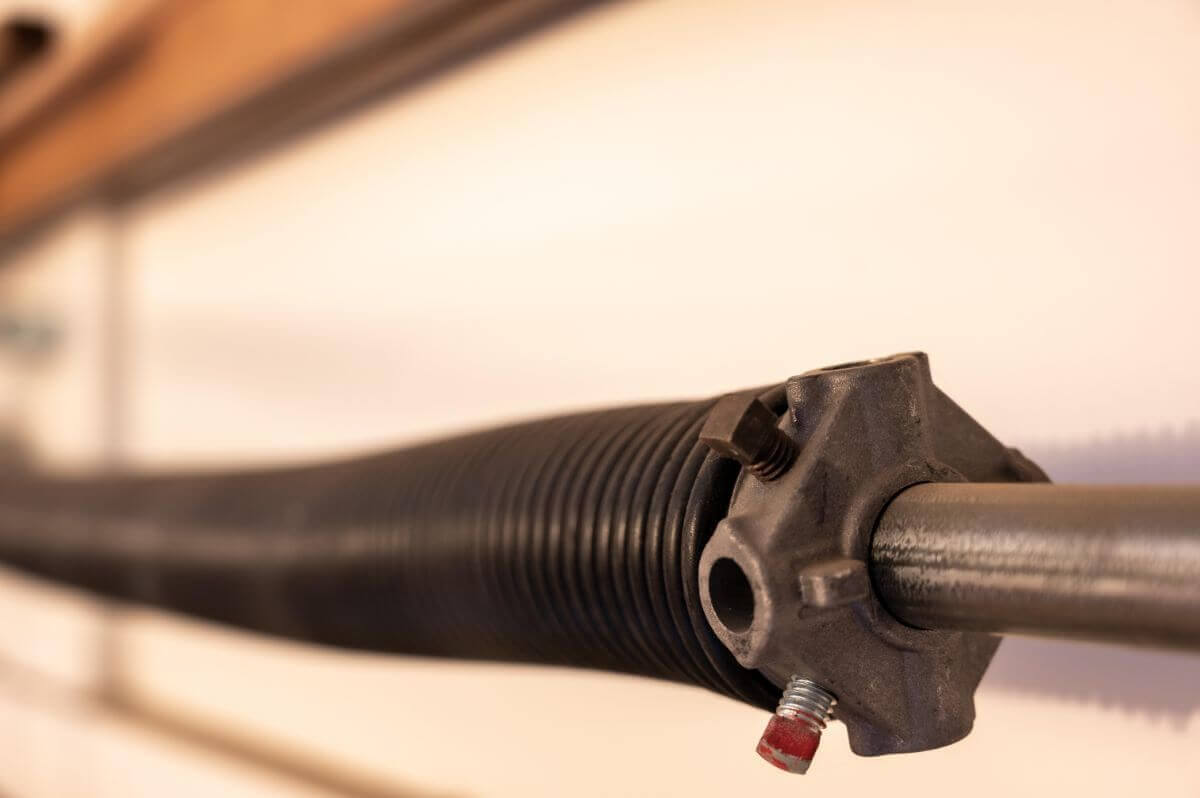
Spring And Cable Setup Under High Tension
This is one of the most time-sensitive and safety-critical phases. Springs and cables control lift force and must match the door weight.
Spring and cable work often includes:
- Installing torsion components on the shaft
- Routing lift cables and setting drum position
- Setting even cable tension on both sides
- Winding springs to the correct count
- Locking set screws and confirming a secure fit
Balance checks are part of this time. A balanced door:
- Stays in place when opened halfway
- Does not slam down or drift upward
- Feels controlled and not heavy
If the balance is off, the opener will strain, and the system may need earlier residential garage door repair.
Opener Setup Or Reconnection
Opener work is a frequent reason the appointment runs longer. It can include:
- Reconnecting an existing opener arm and bracket
- Installing a new opener is included
- Setting travel limits and force settings
- Aligning safety sensors
- Testing multiple open and close cycles
If the opener is older, time may be spent confirming compatibility with door weight and safety requirements.
Safety Testing And Final Inspection
This is where reliability is confirmed before the job is complete.
Common checks include:
- Photo-eye sensor alignment testing
- Auto-reverse testing
- Door travel testing for smooth motion
- Fastener checks on hinges and brackets
- Seal check at the floor and sides
- Cleanup and final walkthrough
These checks support safer daily operation and help reduce the chance of unexpected breakdowns.
Factors That Can Extend Installation Time
Some delays are predictable. Others are discovered after removal or alignment begins. Either way, extra time is often used to protect safety and long-term performance.
Clearance Limits And Track Layout Changes
Tight garages can require extra planning and additional support work.
Examples include:
- Low headroom that needs special track routing
- Limited side room that changes bracket placement
- Obstructions like ducts, storage platforms, or beams
These changes can add time, but they help prevent rubbing, binding, and uneven travel.
Framing That Is Out Of Square
If the opening is not square, the door may not seal evenly or may travel unevenly.
Extra time may be needed for:
- Reinforcement at mounting points
- Bracket repositioning
- Adjustments so the door sits centered
This is common in older garages or openings that have shifted over time.
Rusted Or Damaged Old Hardware
Garage door replacement often takes longer when the old system is difficult to remove.
Common slowdowns include:
- Rusted fasteners that will not release easily
- Bent tracks that resist removal
- Old brackets mounted into weak wood
- Multiple layers of patched hardware from past repairs
This is also a sign that repeated residential garage door repair may have been masking larger system wear.
Heavier Doors And Added Reinforcement
Insulated doors and larger doors often require:
- Added bracing or struts
- Heavier-duty hardware
- Extra balance checking
Heavier doors can improve comfort and noise control, but they can add time during setup.
Opener Replacement Or Electrical Adjustments
Opener-related additions can extend the appointment:
- New opener mounting and rail installation
- Wiring adjustments for power access
- Repositioning wall controls
- Safety sensor relocation
- Travel limit tuning and force adjustment
This time is important because an opener should move a balanced door, not force a heavy one.
Garage Door Replacement Versus New Installation Timing
Replacement jobs usually take longer than new installations, mainly because removal and correction work are added.
Why Garage Door Replacement Adds Time
Garage door replacement often includes:
- Safe spring tension release
- Door section removal
- Track and hardware removal
- Disposal and cleanup
- Correction of worn mounting points
Even if the new door is standard, the old setup might not be.
Why Some New Installs Move Faster
New installations can move faster when:
- There is no old door to remove
- Framing is new and square
- Track supports are easy to mount
- The opener location is already planned
However, new installs can still take longer if the garage has unusual clearance limits.
How Opener Works Changes The Timeline
Opener work can be simple or complex, depending on what is being done.
When Opener Work Is Usually Quick
Opener time is often shorter when:
- The opener is newer and compatible
- The opener bracket location is solid
- Sensors are already positioned correctly
- The door is balanced well on the first check
When Opener Work Takes Longer
Extra time is often needed when:
- The opener is older and struggles under load
- Safety sensors must be relocated
- Wiring needs adjustment
- Limits and force settings require repeated tuning
- A new opener is being installed
If you want to understand the scope for installation services, read What Do Residential Garage Door Installation Services Include.
How Preparation Can Shorten Installation Day
Homeowner prep cannot change spring winding time, but it can reduce delays and make the appointment smoother.
Work Zone Preparation
Helpful steps include:
- Move vehicles out of the garage
- Clear items near the opening and side walls
- Keep the center bay open for staging
- Provide a safe path for moving door sections
Access And Safety Preparation
Good preparation also includes:
- Confirm working lights in the garage
- Confirm outlet access near the opener
- Keep pets and children away from the work area
- Keep the driveway clear for unloading
These steps help the installer complete alignment and safety checks without interruptions.
DOE’s efficient home design guidance is helpful when you are coordinating multiple upgrades, so the installation sequence reduces rework.
Why Installation Should Not Be Rushed
Garage door systems include heavy sections and high-tension lifting parts. Accuracy matters more than speed.
What Careful Installation Helps Prevent
Careful setup helps reduce:
- Uneven travel and track rubbing
- Door drift caused by poor balance
- Opener strain and early wear
- Noisy operation from misalignment
- Repeat residential garage door repair needs
What A Well-Set Door Should Feel Like
After proper garage door installation:
- The door moves smoothly and evenly
- The door closes flat against the floor
- The seal contacts evenly across the width
- The opener runs without hesitation
- Safety sensors perform consistently
This is also where preventive garage door maintenance becomes easier because the system starts from a stable baseline.
What To Expect Right After Installation
The first week is important. Small concerns are easier to correct early.
First-Week Checks That Matter
During the first week, pay attention to:
- Smooth, even travel
- New grinding, popping, or harsh vibration
- Frequent reversing without obstruction
- Gaps at the floor seal
- Uneven closing where one side touches first
If you notice changes, early residential garage door services can help keep small issues from turning into larger repairs.
Preventive Garage Door Maintenance And Long-Term Timing Benefits
Many homeowners focus on installation day, then forget the system until something sounds wrong. Preventive garage door maintenance supports longer life and fewer urgent calls.
Simple Habits That Help
Good habits include:
- Keep tracks clear near the floor
- Watch for loose hardware sounds
- Check the weather seal condition
- Keep safety sensors clean and aligned
- Schedule periodic balance and safety checks
When Service Should Be Scheduled
A common approach is:
- One follow-up check within the first year for heavy-use doors
- Yearly checking for regular-use doors
- Earlier scheduling if noise increases or travel becomes uneven
This helps reduce surprise breakdowns and keeps the system operating smoothly.
NAHB’s routine home maintenance checklist is a useful reference for scheduling seasonal checkups after installation.
Ready To Plan Your Installation Timeline
A realistic installation timeline depends on removal needs, clearance limits, door weight, and opener setup. Standard garage door installation often fits within a few hours, while garage door replacement and opener changes can extend the appointment. Clear access and careful setup protect safe operation and reduce early residential garage door repair needs.
G & G Garage Door provides residential garage door services with straightforward scheduling and clear expectations about timing. If you want help estimating the time for your new garage door setup, contact us or give us a call. We can review your door selection, garage layout, and opener needs to schedule installation in a way that fits your routine.
Frequently Asked Questions
Does replacing an old door take longer than installing a new one?
Yes. Garage door replacement includes safe tension release, removal of sections, and removal of old tracks and brackets. Rusted hardware or weak mounting points can add more time.
Can the installation be completed in one day?
Yes. Most residential garage door services are completed in one visit. Extra time is usually only needed when clearance limits, framing corrections, or specialty track setups are required.
Does opener installation add time?
Yes. Opener installation or tuning can add one to two hours, depending on mounting, wiring needs, sensor placement, and travel limit adjustment.
What can we do to help the appointment move faster?
Clear the garage, move vehicles out, and keep the work area open. Working lights and accessible outlets also help reduce interruptions during installation and safety testing.
Does the weather affect installation time?
The weather usually does not change installation steps, but extreme conditions can affect driveway access and household scheduling. Indoor garage conditions can also affect comfort during the appointment.
Will low ceilings or tight garages increase installation time?
Yes. Limited clearance often requires track layout changes, added support work, and extra checking for smooth travel, which can extend the appointment.
Is it better to rush the installation if we are short on time?
No. Rushing increases the risk of balance concerns, noisy operation, and early residential garage door repair needs. Accurate alignment and safety testing protect long-term performance.
When can we use the garage after installation?
In most cases, you can use the garage right after installation once safety testing is complete and we confirm smooth operation and correct reversing performance.
Should we schedule maintenance soon after installation?
A routine check within the first year supports preventive garage door maintenance and helps confirm balance, sensor performance, and steady travel, especially for doors used multiple times daily.