




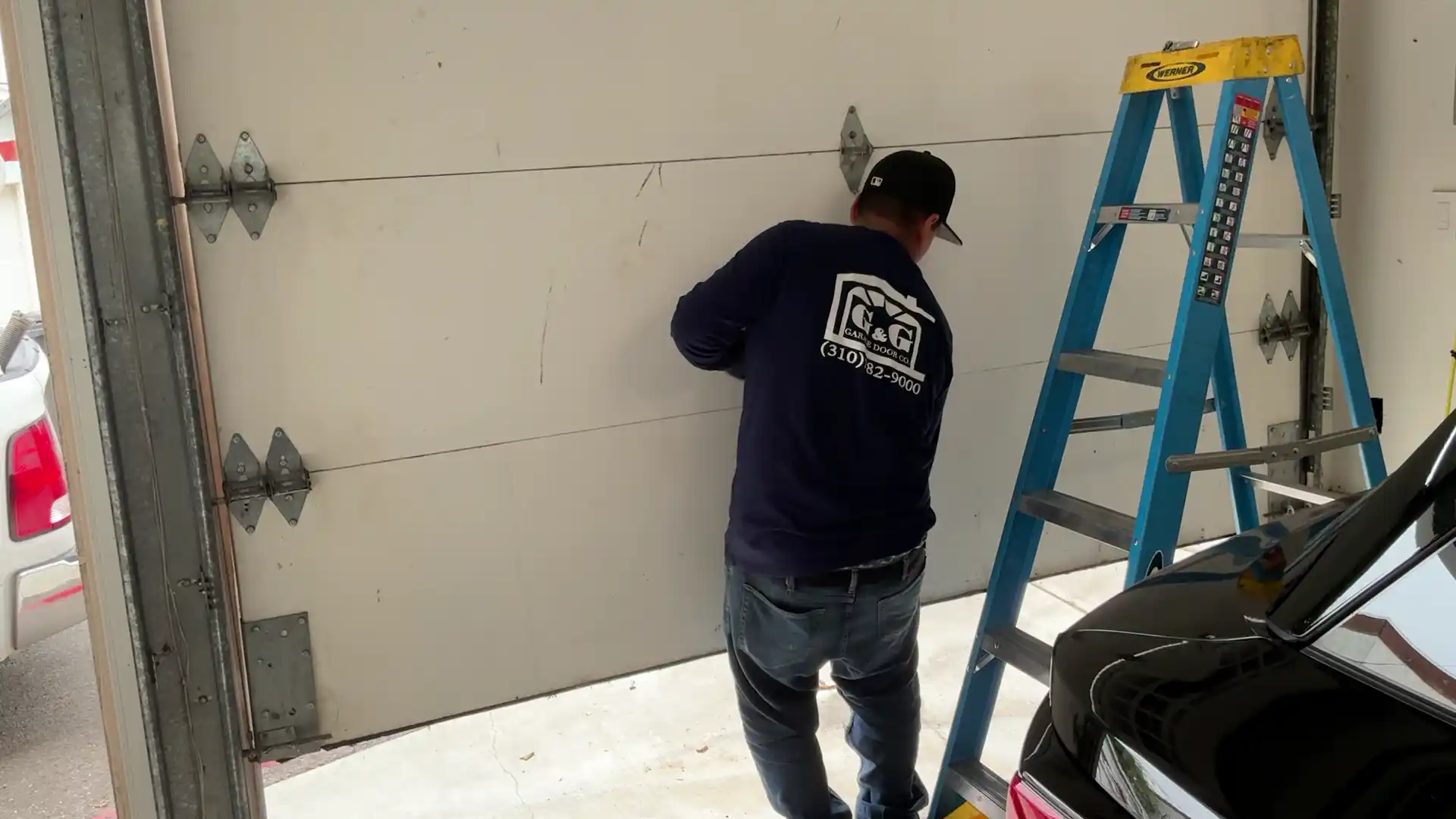
Picture this: it’s a chilly December morning in Anaheim, CA, the temperature dropped overnight to around 42°F, and when the garage door remote gets hit, nothing happens. The door groans, shudders, or just sits there like it forgot its whole job. Here is the thing most homeowners do not realize: even mild cold weather, the kind Southern California gets in winter, is enough to cause real problems with a garage door system. Anaheim may not deal with blizzards or ice storms, but those cool nights and chilly mornings from November through February put serious stress on parts that are already working hard every single day.
As garage door specialists serving the Anaheim and Orange County area, the same cold-weather issues show up every winter, and most of them are completely preventable. Staying on top of garage door maintenance is the single best way to avoid getting caught off guard on a cold morning. Below are the 7 most common reasons a garage door refuses to open in cold weather, what to check, and what steps to take before calling a pro.
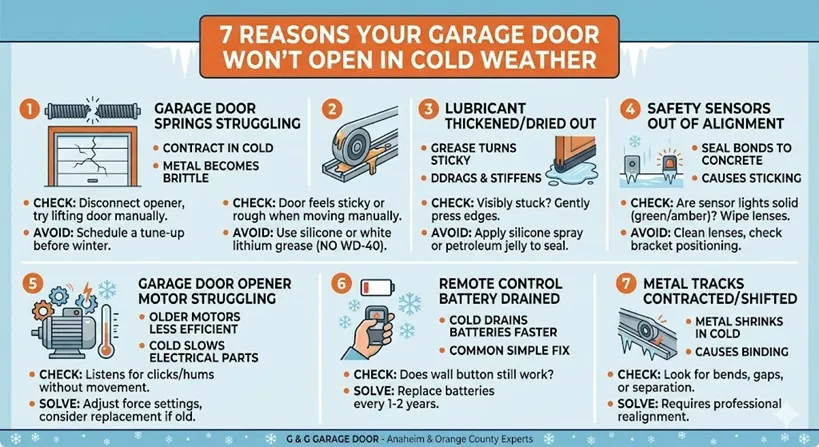
7 Reasons Your Garage Door Won’t Open in Cold Weather
1. The Garage Door Springs Are Struggling With the Cold
This is the number one cold-weather call that garage door technicians in Anaheim receive every single winter, and for good reason.
Garage door springs, both torsion springs (mounted above the door) and extension springs (running along the sides), are responsible for carrying most of the door’s weight. They are under an enormous amount of tension at all times.
When temperatures drop, metal contracts. Think about how a jar lid from the fridge feels tighter and harder to open than one sitting at room temperature. The same thing happens to your springs. They tighten up, lose their balance, and in some cases, snap completely.
A broken torsion spring often makes a loud bang that sounds like a firecracker going off inside the garage. If that has happened, do not try to operate the door. A door without a working spring is extremely heavy and dangerous to open manually.
What to check: Disconnect the automatic opener by pulling the red emergency release cord. Try lifting the door by hand. If it feels unusually heavy or will not lift more than a few inches, a spring is likely the problem.
How to avoid it: Schedule a professional garage door tune-up before winter hits. A technician can check spring tension and make adjustments before the cold causes a bigger issue.
Solution: Spring replacement is not a DIY repair. The tension involved is serious enough to cause injury if handled incorrectly. A licensed garage door technician can replace springs safely, with the average cost of spring replacement falling in the moderate range, depending on the type of spring and door size.
If the door is still not responding even after checking the springs, the problem could run deeper. The guide on Garage Door Won’t Open or Respond? Here’s What’s Going Wrong breaks it down further.
2. The Lubricant in Your Tracks and Rollers Has Thickened or Dried Out
Cold weather turns old or incorrect lubricant into a thick, sticky mess. It is a lot like cold honey; it does not flow, it drags.
When the grease or lubricant coating your rollers, hinges, and tracks gets sluggish in the cold, every part of the door system has to work harder. The opener strains, the rollers grind, and eventually, the door either moves very slowly or stops altogether.
One of the most common mistakes homeowners make is using WD-40 on their garage door parts. WD-40 is a solvent, not a long-term lubricant. It strips away the existing grease and leaves parts even more vulnerable to cold and friction.
What to check: After disconnecting the opener, try moving the door by hand. Does it slide smoothly, or does it grind and resist? If it feels sticky or rough, lubrication is likely overdue.
How to avoid it: Use a silicone-based or white lithium grease spray on rollers, hinges, springs, and the top of the tracks (not the inside of the tracks). Do this at least twice a year, with one application before winter.
Solution: A basic lubrication service is one of the most affordable garage door fixes available. If the door has gone years without proper lubrication, a full tune-up that includes cleaning out old debris and re-greasing all moving parts is the smart move.
Wondering if a spring issue is behind the lubrication problem? The article Is a Broken Spring Why Your Garage Door Won’t Open? is worth a read before assuming it is just a grease issue.
3. The Weatherstripping at the Bottom Is Frozen to the Ground
The rubber seal running along the bottom of the garage door is there to keep out cold air, water, and pests. But in freezing or near-freezing temperatures, that same seal can bond to the concrete driveway or garage floor like glue.
When the opener tries to lift the door against a frozen seal, something has to give. In many cases, it is the seal itself (which tears), the opener (which overworks and burns out), or the bottom panel of the door.
In Anaheim, this is more common than people expect. Overnight lows in the mid-40s combined with moisture from evening condensation or light rain are enough to create a frozen seal situation.
What to check: Look at the bottom of the door from the outside. Is the seal visibly stuck to the ground? Gently press on it near the edges to feel if it has bonded.
How to avoid it: Before cold nights, apply a thin coat of silicone spray or petroleum jelly along the bottom seal. This creates a barrier that prevents the rubber from sticking to the ground.
Solution: Do not force the door open. Use warm (not boiling) water poured along the base of the door, or a heat gun held at a safe distance, to gently thaw the seal. If the seal is already torn or cracked, replacement is necessary and relatively inexpensive.
If the seal checks out but the door still refuses to budge, the sensors could be the real culprit. Check out Are Misaligned Sensors Why Your Garage Door Won’t Open? to see if that matches the situation.
4. The Safety Sensors Are Out of Alignment or Frosted Over
Every modern garage door has two small safety sensors mounted near the floor on either side of the door opening. They send an invisible beam back and forth. If anything breaks that beam, the door will not close, and in some cases, it will reverse when trying to open.
Cold air sinks, which means the coldest air in your garage pools right at floor level, exactly where the sensors live. Temperature swings can shift sensor brackets just enough to break the beam alignment. Frost and condensation can also coat the sensor lenses and block the signal entirely.
A blinking light on the opener unit is one of the clearest signs of a sensor problem.
What to check: Look at both sensors near the base of the door tracks. Each one has a small indicator light. One should be steady green, and one should be steady amber. If either light is blinking or off, the sensors are the likely culprit.
How to avoid it: Wipe down sensor lenses with a dry, clean cloth at the start of each winter season. Make sure nothing has bumped the brackets out of position.
Solution: Sensor realignment is a quick job for a technician. Do not ignore misaligned sensors since they are a safety feature, and a door that will not stop for an obstacle is a serious hazard.
5. The Garage Door Opener Motor Is Struggling in the Cold
Garage door opener motors are built to be reliable, but cold temperatures slow down electrical components and reduce motor efficiency. Older openers are especially vulnerable.
The motor may click, hum, or start to run but not have enough power to lift the door, especially if springs or lubrication are also contributing to resistance. Some openers have auto-reverse settings that trip if they sense too much resistance, causing the door to stop or reverse before it is fully open.
What to check: Listen carefully when pressing the button. Does the opener make a sound, but the door does not move? Does the door start to open and then stop? Does the opener light blink a specific number of times? (Many openers use blink codes to signal the type of problem.)
How to avoid it: If the opener unit is more than 10 to 15 years old, a pre-winter inspection is a smart investment. A technician can test the motor load and adjust force settings.
Solution: Sometimes a force adjustment or sensitivity setting fix is all that is needed. For older units that are consistently struggling, replacement is worth considering. Modern openers are significantly more efficient and come with battery backup options.
6. The Remote Control Battery Has Been Drained by the Cold
This one is easy to overlook, but cold temperatures drain batteries faster. The same reason a smartphone dies quickly on a cold day applies to the small batteries inside garage door remotes and keypads.
The good news is that this is the simplest fix on the entire list.
What to check: Go inside the garage and press the wall-mounted button. If the door opens normally, the issue is the remote battery, not the door system itself.
How to avoid it: Replace remote and keypad batteries every one to two years as a habit. Keep a spare set in the car or in a kitchen drawer so a dead battery is never a surprise.
Solution: Fresh batteries fix this instantly. If the remote still does not work after a battery swap, it may have lost its programming and need to be re-synced to the opener, which takes just a few minutes.
7. The Metal Tracks Have Contracted and Shifted Out of Alignment
Metal shrinks in cold weather. It is a basic fact of physics, and it applies directly to the vertical and horizontal tracks that guide your garage door up and down.
Even minor contraction in the tracks can cause them to tighten around the rollers or pull slightly away from the door frame. When the rollers cannot move freely through the track, the door binds, jerks, or stops entirely.
What to check: With the opener disconnected, look along both tracks from front to back. Are they straight and parallel? Are there any visible bends, gaps, or sections where the track pulls away from the wall bracket? Do the rollers sit evenly inside the track?
How to avoid it: Have a technician inspect track alignment as part of an annual maintenance visit. Catching small shifts early prevents bigger problems later.
Solution: Track realignment requires the right tools and experience. Attempting to bend a track back into position without proper training can make the misalignment worse or crack a door panel. Average costs for track realignment are typically reasonable and far less expensive than replacing a damaged door.
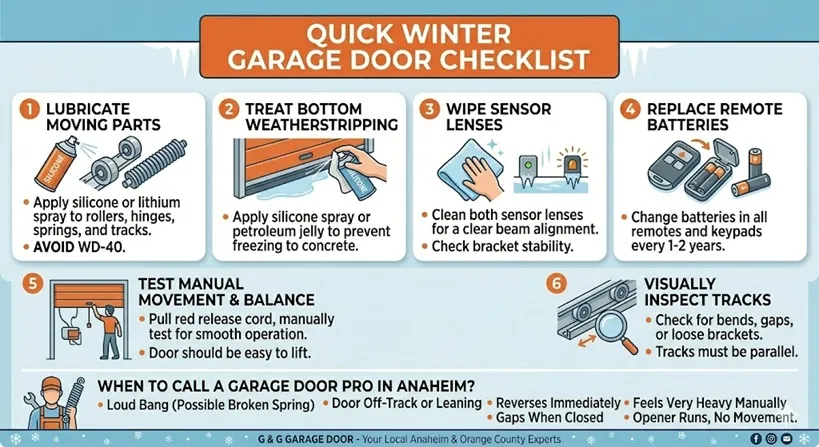
Quick Winter Garage Door Checklist for Anaheim Homeowners
Before the next cold snap hits, run through this list to stay ahead of the most common problems:
- Lubricate all rollers, hinges, springs, and the top section of tracks with silicone or lithium spray
- Treat the bottom weatherstripping seal with silicone spray or petroleum jelly
- Wipe down both sensor lenses and confirm indicator lights are solid
- Replace the remote and keypad batteries
- Disconnect the opener and manually test the door for smooth, balanced movement
- Visually inspect both tracks for bends, gaps, or separation from the wall
- Schedule a professional tune-up before December arrives
When Should You Call a Garage Door Pro in Anaheim?
Some of the checks above are safe for homeowners to do on their own. But there are clear signs that it is time to pick up the phone and call a licensed technician:
- A loud bang came from the garage (possible broken spring)
- The door is visibly off-track or leaning to one side
- The door reverses immediately after pressing the button
- The door feels extremely heavy when lifted manually
- There is a visible gap on one side when the door is fully closed
- The opener runs, but the door does not move at all
Homeowners in Anaheim and across Orange County should never force a struggling garage door open or closed. What starts as a frozen seal or a sticky roller can turn into a snapped spring, a damaged opener, or a bent track if the door is forced repeatedly.
Do Not Let Cold Weather Leave You Stranded
Cold weather and garage doors are a combination that catches a lot of homeowners off guard, especially in a place like Anaheim, where mild winters create a false sense of security. The truth is that even a 40-degree night is enough to stiffen springs, thicken grease, freeze seals, and knock sensors out of alignment. The seven issues covered above account for the vast majority of cold-weather garage door calls in the Anaheim and Orange County area every winter, and most of them are preventable with a simple maintenance routine and an annual professional tune-up.
For homeowners dealing with a garage door that is already acting up this season, the safest and smartest move is to contact a trusted local garage door company serving Anaheim, CA. A qualified technician can diagnose the issue quickly, explain the options clearly, and determine whether a repair or a full garage door replacement is the right call before the next cold snap arrives.
Your Local Garage Door Experts in Anaheim, CA
G & G Garage Door has been a trusted name in the Anaheim and Orange County area, known for fast response times, honest assessments, and quality workmanship that homeowners can count on. Whether it is a broken spring, a frozen seal, a misaligned sensor, or a struggling opener, our team has the experience and tools to get the job done right the first time. Do not wait until a small issue turns into a costly repair. Contact us today or give us a call to schedule a winter inspection before the next cold night catches you off guard.
Frequently Asked Questions
[sp_easyaccordion id=”10848″]