



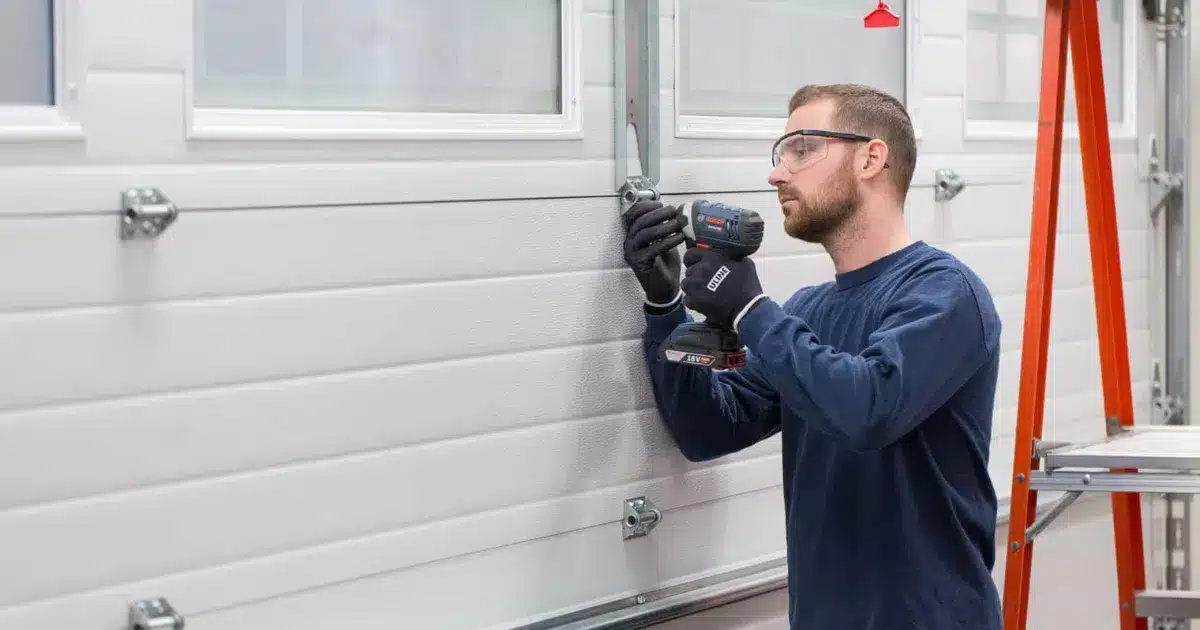
When your garage door comes off track, most homeowners want one thing: a safe, reliable door again without guessing what is broken. That is a smart mindset. A garage off-track door is not just “a loud door.” It is a door that is no longer being guided correctly, which can lead to sudden shifting, opener strain, and damaged hardware if it is forced.
This guide explains what a professional repair visit typically looks like, what a technician checks first, what outcomes are common, and how to avoid repeat off-track issues in Anaheim, CA. It is written in plain language, the same way a technician would walk you through it during service.
Quick Answer
During an off-track service visit, a technician typically secures the door first, then checks track alignment and bracket stability, inspects rollers and hinges for wear, checks cables and drums for uneven lift, confirms door balance and lift performance, and tests opener operation through a full travel cycle. Many off-track repairs include restoring correct track spacing, replacing worn rollers or hardware, correcting door section alignment, and addressing lift issues that caused the door to lean or bind. In Anaheim, heat, dust, and frequent daily cycles can accelerate roller wear and loosen hardware, so preventing repeat problems usually comes from consistent inspection and tune-up habits, not a single adjustment.
If you still need the main “what to do right now” guide, read Garage Door Off Track: Top Causes And Safe Next Steps.
Before You Start: A Quick Safety Note
If your door is leaning, stuck mid-travel, or you can see a roller out of the track, do not keep operating it. A technician can stabilize the door safely. Trying to force movement can bend tracks, pop more rollers out, or create cable imbalance.
Also, if you see a slack cable, do not touch it. Cables are part of a high-tension lift system.
What A Technician Sees When They Arrive
On most service calls, the homeowner describes the problem like this:
- “It leans on one side.”
- “It makes a grinding sound.”
- “It stopped halfway.”
- “It looks like it is coming off the side.”
A technician will usually start by observing the door position and deciding how stable it is before touching anything. The first goal is not “repair it fast.” The first goal is to prevent a shift that could damage the door or create a safety hazard.
If the door came off track after a bump or loud noise, read Why Garage Doors Jump The Track And When It Happens Most.
What A Repair Visit Usually Includes
Every door is different, but the flow of a professional visit is usually consistent. Here is what you can expect.
Initial Safety Assessment And Stabilizing The Door
The technician checks:
- Is the door leaning or twisted
- Are the rollers outside the track
- Is the track bent or pulling away
- Are cables tight and seated
- Is the door stuck mid-travel
If the door is unstable, the technician may:
- Secure the door to prevent sudden shifting
- Reduce risk before attempting movement
- Avoid running the opener until the door is guided correctly
This is the part homeowners often underestimate. Stabilizing comes before correcting.
Visual Inspection Of Track Alignment And Track Condition
Track problems are one of the most common causes of off-track issues. A technician will check:
- Track spacing relative to the door
- Whether the tracks are plumb and aligned
- Bracket tightness and bracket placement
- Damage such as dents, pinch points, or splits
- Whether fasteners are holding properly in the framing
Common findings:
- Track drift from loosened brackets
- Track shifted from minor impact
- A dented section creates a pinch point
- The track pulled slightly away from the wall
This is also where a technician checks for evidence of long-term rubbing, like shiny scrape marks.
Roller Inspection And Roller Path Evaluation
Garage door rollers are critical. Even if the track looks “fine,” worn rollers can climb the track edge.
A technician checks:
- Roller wear and bearing condition
- Roller wobbles during travel
- Roller stem straightness
- Roller bracket condition
- Whether the rollers are centered in the track channel
Common findings:
- Worn roller bearings are causing wobble
- Tilted rollers riding the track edge
- Roller stems bent from stress or impact
- Brackets shifting under load
In Anaheim, heavy daily cycling plus heat can accelerate roller wear, especially if the door has not been inspected regularly.
Hinge And Hardware Check For Door Section Stability
Door sections are connected by hinges. If hinges loosen or hardware shifts, the door can twist and push the rollers out.
A technician checks:
- Hinges for looseness or damage
- Fasteners for hold strength
- Door section alignment
- Any cracks or fatigue at hinge points
Common findings:
- Loosened hinges are causing section misalignment
- Hardware movement that changes roller position
- Door panels are flexing more than they should
This matters because even a small twist can push rollers toward the track lip.
Cable, Drum, And Lift System Inspection
This is the part that often explains why the door leaned.
A technician checks:
- Cable tension on both sides
- Cable condition (fraying, wear, slack)
- Drum wrap and seating
- Signs of uneven lift
- Lift components for stability
Common findings:
- Uneven cable wrap is causing crooked travel
- A cable beginning to fray
- A drum issue leading to uneven lift
- Door lifting higher on one side
If the lift system is uneven, the door is at higher risk of jumping the track again unless the root issue is corrected.
For a simple explainer of why cable problems are a stop-and-call-a-technician situation, this Medium article discusses off-track cable warning signs.
Door Balance And Travel Behavior Assessment
A balanced door should move smoothly and not feel excessively heavy. The opener should not be doing the heavy lifting.
A technician checks:
- Door balance and smoothness
- Resistance points in travel
- Whether the door binds at a curve or at the floor
- Whether the door stays stable through the full cycle
Common findings:
- Door resistance from misalignment
- Tight travel from track drift
- Uneven loading that stresses rollers
If the door is not balanced, the opener will strain, and track issues may recur.
Opener Check To Confirm It Was Not Damaged
Once the door is stable, the technician checks the opener’s behavior.
They may check:
- Opener rail alignment and vibration
- Trolley engagement
- Travel behavior once the door is corrected
- Safety reversal response
Important detail: most off-track problems are mechanical, but the opener can be damaged if it is forced repeatedly. A technician checks for signs of strain so you do not end up with a second problem later.
Common Repair Outcomes And What They Usually Mean
Homeowners often ask, “What will you probably need to do?” These are the most common repair categories.
Restoring Track Alignment And Stabilizing Brackets
This is common when tracks drift or shift.
Typical outcome:
- The track is corrected to proper spacing and alignment
- Brackets are stabilized and secured
- The door is tested for smooth travel
Replacing Worn Rollers Or Roller Hardware
This is common when rollers wobble or bind.
Typical outcome:
- Worn rollers are replaced
- Roller brackets are checked for stability
- The door runs more quietly and smoothly
Correcting Door Section Alignment Issues
This happens when hinges or hardware movement causes twisting.
Typical outcome:
- Hinges and fasteners are secured or replaced
- Door sections are corrected to a straighter path
- Roller travel becomes more stable
Addressing Lift System Issues That Caused Uneven Travel
This is common when the door leaned, and cables were involved.
Typical outcome:
- Cable seating and tension issues are corrected
- Drum wrap is corrected
- The door returns to even lifting behavior
Repairing Or Replacing Bent Track Sections
This is common after impact or long-term rubbing.
Typical outcome:
- Damaged track sections are replaced or corrected
- The pinch point is removed
- The roller path is restored
To understand which off-track symptoms are safety concerns, read Garage Door Off-Track Warning Signs And Safety Checklist.
What You Can Do To Help The Visit Go Smoothly
A few small steps help a service call go faster and safer.
- Clear the area around the tracks and door opening
- Keep pets and children away from the garage
- If your car is inside, do not try to drive under a leaning door
- Tell the technician what you heard and when it started
- Mention any recent impacts, storms, or unusual noises
That last point matters. Many root causes show up in timing patterns.
How Long Off-Track Repairs Usually Take
Most off-track calls can be diagnosed quickly, but the time depends on:
- How unstable the door is
- Whether rollers or track sections are damaged
- Whether the lift system is uneven
- Whether the opener was strained
A technician’s priority is safe stabilization first. That is why some calls move fast, and others require more careful work.
Why Repeat Off-Track Problems Happen
If a door went off track once and then does it again later, it is usually because the root cause was not fully corrected.
Common repeat causes:
- Track alignment was corrected, but worn rollers were left in place
- Rollers were replaced, but the track bracket drift was not addressed
- The door was put back into travel, butan uneven lift was still present
- A bent track section was not replaced
- The door has a balance issue that keeps stressing the roller path
In Anaheim, frequent daily use, along with heat and dust, can make repeat issues more likely if garage door maintenance is delayed.
Tips To Prevent Another Off-Track Repair
These are simple habits that reduce repeat issues.
Watch For New Noise And New Hesitation
A door that starts scraping or hesitating is giving early warnings. Family Handyman outlines a practical tune-up routine homeowners can use to catch roller and hardware wear before it escalates
Keep Track Areas Clear
Avoid storing items close to the vertical tracks where they can bump or shift them.
Keep Lower Corners Free Of Debris
Wind-blown grit collects there and can create resistance.
Schedule Periodic Tune-Ups
A tune-up can catch track drift, roller wear, and hinge looseness before the door comes off track again.
Choose A Repair That Prevents Repeat Off Track Issues
An off-track garage door repair is about more than getting the door moving again. It is about identifying why the door left the track, correcting alignment and wear issues, and making sure the lift system and opener are not being pushed beyond their limits. A thorough inspection helps prevent repeat problems and protects the door from further damage.
When you need reliable, professional off-track repair service, G & G Garage Door is ready to help with a safety-first approach and clear communication throughout the process. Contact us today to schedule service and get your garage door back to smooth, dependable operation.
Frequently Asked Questions
[sp_easyaccordion id=”9789″]